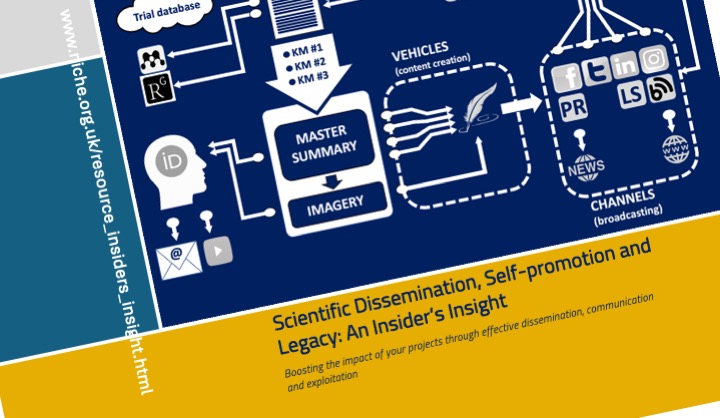
Dissemination is widely recognised as an integral component of responsible scientific practice rather than an optional or self-serving activity. The volume of scientific output had increased dramatically, while attention from peers, policymakers, clinicians, and the public had become a scarce resource. In this environment, the impact of research depends not only on methodological rigour, but also on how effectively findings are communicated, contextualised, and made accessible.
Evidence from research evaluation, knowledge translation, and science communication analyses demonstrate that structured, strategic dissemination improves research uptake, reproducibility, and societal value without compromising scientific integrity [1][2][3]. Here are ten evidence-based tips for promoting scientific research, grounded in dissemination theory and practice, and framed as part of a researcher’s long-term professional and scholarly legacy [4].
Effective dissemination begins with clarity about who needs to hear about your research and why. Different audiences (academic peers, clinicians, policymakers, patients, or funders) have distinct informational needs and decision contexts. Studies in knowledge translation show that tailoring communication to audience priorities significantly improves message uptake [5]. An informed process that targets optimal journal identification will save you time, money and heartache [5][6][7]. For early-career researchers, this will mean focusing on disciplinary peers and supervisors, while senior researchers will want to engage broader stakeholder groups. Attempting to reach “everyone” risks reaching no one.
Research dissemination is most effective when anchored by a small number of clear, evidence-based key messages. These messages should reflect the core contribution of the work, its limitations, and its relevance. Communication studies show that repetition of consistent messages improves recall and credibility without oversimplification [8]. For researchers, this involves articulating findings in ways that remain stable across abstracts, conference presentations, press summaries, and online profiles.
Promotion is often viewed cautiously in academic cultures; however, dissemination aligned with scientific values enhances credibility (rather than diminishing it). Transparency, acknowledgment of uncertainty, and consistency with the published record are critical [9]. Over time, researchers can develop a scientific ‘brand’ defined not by self-promotion, but by clarity of expertise and reliability. Senior researchers play an important role in modelling responsible dissemination norms for trainees.
Researchers operate in a saturated information environment. Bibliometric analyses indicate that publication alone is insufficient to secure attention or message dissemination [10]. Share of voice, the proportion of attention captured within a field or topic area, depends on strategic timing, clarity, and relevance. Recognising information overload encourages selective, purposeful dissemination rather than indiscriminate and diluting broadcasting.
Evidence indicates that research disseminated through multiple channels achieves greater reach and citation impact than research shared through journals alone [11]. Traditional outputs such as peer-reviewed articles and conference presentations remain central, but they are complemented by institutional websites, press releases, repositories, and professional networks. Early-career researchers benefit from learning how different channels can be used to reinforce rather than duplicate message dissemination: build a plan of engagement (see point #10).
Open access publishing is consistently associated with increased readership and citation advantage [12]. Policy bodies and funders increasingly emphasise the use of open access, recognising its role in equity and transparency [13]. While not all researchers control publishing models, making accepted manuscripts available via repositories is a practical and ethical dissemination strategy for all.
Visual abstracts, infographics, and short videos can enhance comprehension and engagement when used responsibly. Empirical studies show that visual summaries increase online visibility without reducing scientific accuracy when properly governed [14]. For complex research, visuals should complement rather than replace full methodological reporting. Senior researchers should ensure that such materials are reviewed with the same care as written outputs and held to the same level of integrity.
Responsible reuse of content across formats and platforms extends the lifespan of research outputs (in a landscape that has exceedingly short attention spans). This includes adapting conference presentations into review articles or summarising findings for non-specialist audiences. Importantly, reuse must respect copyright, attribution, and contextual integrity [15]. For early-career researchers, repurposing can maximise return on effort while reinforcing key messages. Use the four ‘Rs’: Re-use, repurpose, recycle, re-target.
Alternative metrics (altmetrics) are increasingly being used to capture dimensions of research influence, data that isn’t reflected in citation counts alone [16]. While such metrics should be interpreted cautiously, they provide insight into audience reach and engagement. Thoughtful use of metrics supports reflective dissemination practice beyond performative promotion.
The most effective dissemination strategies are planned, governed, and sustained over time. Treating dissemination as an afterthought leads to inconsistency and missed opportunities. Integrating dissemination planning into research design aligns with guidance from funders and policy organisations [17]. Across a career, consistent, ethical dissemination contributes to a durable scientific legacy defined by trust and impact rather than visibility alone.
Promoting scientific research is not about self-advertisement, but about stewardship of knowledge. When grounded in evidence, ethics, and strategic intent, dissemination enhances the value of research for science and society alike. The challenge for researchers is not whether to disseminate, but how to do so responsibly, effectively, and sustainably. The ten principles outlined here position dissemination as a core scholarly and commercial competency, one that supports individual careers while strengthening the collective enterprise of science.
References

Get our latest news and publications
Sign up to our news letterResources
Social


Contact us
Address
Niche Science & Technology
Unit 26 Falstaff House
Bardolph Road
Richmond TW9 2LH
United Kingdom