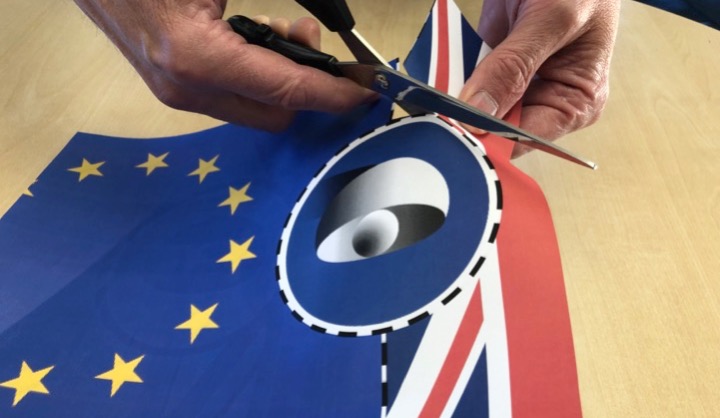
However you may feel about the way political leaders have turned Brexit into a shambles, you can’t criticise the pharmaceutical industry for not preparing.
Pharmaceutical companies have been working with the government to prepare for a no-deal Brexit, and in the event of a catastrophic split, extreme steps would have to be taken to keep medicine supplies going. It is thought that as many as 26 groups have been persuaded to sign "gagging orders" that stop them from giving information to the public. This is in an industry that has been working hard to be more open. Figures show that 16 drug companies and 10 trade associations have been asked to sign non-disclosure agreements (NDAs) which prevent them from revealing any information related to contingency plans drawn up with the Department of Health and Social Care [1].
At least one government agency has adopted a more sensible approach. The UK’s Medicines and Healthcare products Regulatory Agency (MHRA) has been openly talking with its industry partners since negotiations began. Notably, these discussions and their engagement have even been formalised in the scientific meetings and the literature [2]. Perhaps a level of openness the rest of Whitehall could take a lesson from.
Yesterday (3 Jan 2019), the MHRA expanded its previous position on its ‘no-deal’ Brexit Preparations for Drugs, Medical Devices, issuing new guidance and further clarification on key regulatory positions in case of a ‘no-deal’ scenario as Brexit threatens to turn into a national catastrophe.
The 14-page guidance document explores the current and possible future regulatory position for medicines and medical devices coming into the UK market, as well as the conduct of clinical trials in the UK [3]. The current document was based on answers to the MHRA's October request for industry input on how current laws and the regulatory pathway for drug development might need to be changed if the UK and the EU can't come to an agreement by March.
The MHRA worked with different groups in 2018 and emphasised the important part it plans to play in European regulatory environment overall, even if the current talks between the UK and the EU fail to produce a deal that can be used. The agency has once again shown a high level of planning by putting forward plans to change rules in the event of a no-deal Brexit. People might think this means the government doesn't trust Parliament to pass the deal they've made with the EU.
The MHRA helps calm industry worries by making it clear what needs to be done to prepare for possible outcomes after Brexit. However, its advice is still pretty negative. It makes things even more complicated for many people who work in the business. As the new year begins, they have to learn yet another set of rules. As a way to help the industry get ready for Brexit, the MHRA released a set of guidance papers in August. The process is expected to be finished by December 2020. When the MHRA released Brexit no-deal advice for clinical trial sponsors in October 2018, the worst-case scenario was still seen as ‘unlikely,’ and the agency was still hoping to reach a deal by the autumn.
The advice given by the industry yesterday is only for a "no-deal" situation. This is what the MHRA calls a "more comprehensive version" of the technical information notice that came out in August 2018. It mainly talks about pharmaceuticals and includes three plans for clinical studies and seven "key arrangements" for a no-deal Brexit. Only two of the points are about medical gadgets.
Finding the right rules for the future pharmaceutical space might be a little easier, since the European Medicines Agency makes decisions about marketing without having to ask Member States for permission, which is not the case for devices. The EU's medical device and in vitro diagnostic rules (MDR/IVDR) make things even more difficult for the UK as it gets ready for Brexit. A group called MHRA says that by March 30, 2019, it will have a set of rules that are the same as the main parts of MDR/IVDR.
The office also plans to follow the EU's plans for the MDR/IVDR transitions in 2020 and 2022. In January 2018, the MHRA said that there would be no sudden changes to the way drugs are regulated in the UK. The new advice suggests changes that would happen around March or April. These changes include using a risk-based approach to extra lab tests for drug products.
The medical device industry is likely to like a new plan that lets currently CE-marked devices stay on the UK market even if there is no deal after Brexit, at least for a certain amount of time. This is as long as the necessary labelling rules for medical devices are still followed. The MHRA says that more information about the steps that will be needed to bring a medical device to the UK market in the future will be chosen at a later date. They also say that businesses will have enough time to adapt to any new challenges. But things might not go smoothly. In the event of a no-deal Brexit, it has been suggested that the EU stop recognising new medical devices seeking CE marking by UK-based notified bodies (NBs). This shows how unclear things are for new medical goods trying to enter the EU market instead of the UK market.
As you might have guessed, the advice from yesterday is not the end of the story. "In due course," more information about some proposed drug routes should be made public. These are likely to have to do with grandfathering marketing authorizations (MAs), new MA procedures for products with new active substances and biosimilars, giving free scientific advice to small and medium-sized businesses in the UK, sending in plans and studies for paediatric investigations, and the needs for shortened applications to get MAs in the UK. Clearly, this is important reading and understanding for anyone in the pharmaceutical business (in the UK and the EU) who is coming back to work after a holiday. Have fun reading.
References

Get our latest news and publications
Sign up to our news letterResources
Social


Contact us
Address
Niche Science & Technology
Unit 26 Falstaff House
Bardolph Road
Richmond TW9 2LH
United Kingdom