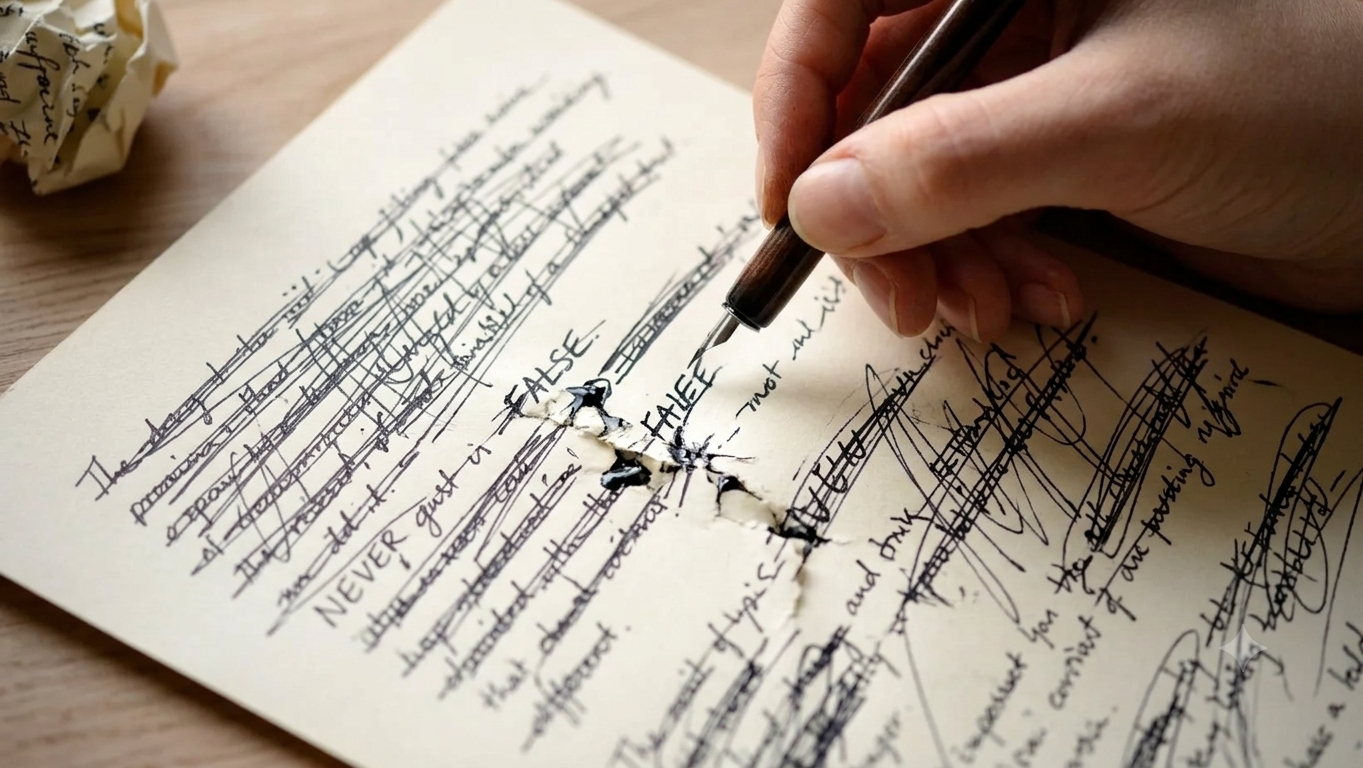
We’ve all done it, got angry at a service provider, neighbour or politician. The response of the more civilised among us is to write a letter of complaint, either to the ombudsman, the newspaper of the perpetrator. It often takes a lot of effort to construct a reasoned argument… but do you send it?
The unsent angry letter is a deceptively simple psychological tool: write down everything that enrages you, then never send it. Yet beneath this simplicity lies a sophisticated interplay of cognitive processing, emotional regulation, and behavioural restraint. Historically practised by figures such as Churchill, Lincoln, and Twain, the unsent angry letter has re‑emerged in digital form as the angry email and on like The Angry Letter website. In an era dominated by impulsive social‑media expression, understanding why unsent angry ‘letters’ are so cathartic, and how they function psychologically, is increasingly important.
Expressive Writing as Emotional Regulation
I find that ‘expressive’ writing highlights how transferring emotional experiences onto the page reduces physiological arousal and promotes clearer thinking. Foundational work on expressive writing has shown that structured emotional expression improves emotional regulation and reduces stress responses [1]. More recent meta‑analyses confirm that writing about anger does not intensify it, as you find with physical venting, instead it reduces arousal by engaging reflective cognitive processes [2].
Anger is a high‑arousal emotion involving sympathetic activation, narrowed attentional focus, and impulsive behavioural tendencies. Writing slows cognition, engages prefrontal regulatory circuits, and forces the writer to articulate diffuse affective states in structured language. This aligns with the Schachter‑Singer two‑factor theory of emotion, which emphasises the interaction between physiological arousal and cognitive interpretation [3]. By reducing arousal and reshaping interpretation, unsent angry letters provide emotional relief without (what might be) harmful expression.
Why Putting Pen to Paper Channels Rage So Effectively
Putting pen to paper remains a great joy of mine and the act of handwriting adds an embodied dimension to emotional processing. For me, the very act of forming letters slows thought, increases deliberation, and engages sensorimotor pathways associated with emotional regulation. Studies on embodied cognition show that handwriting activates neural circuits linked to reflective processing more strongly than typing [4]. This possibly explains why traditional pen‑and‑paper angry letters often feel more cathartic than digital equivalents. I still remember heated discussions I had with the Editor of Clinical Science in the 1980s whereas have little memory of arguments with the Office of the Mayor of London just a few years ago.
Symbolic destruction also plays a role. The Telegraph’s 2024 analysis of angry letters notes that many people burn, tear, or discard their unsent letters as a ritual of release [5]. This has been likened to cultural practices such as Japan’s Hakidashisara festival, where participants smash discs representing sources of anger. Research on symbolic destruction shows that such rituals reduce emotional arousal and promote psychological closure [6]. I remember several of my classmates burning their dissertations when we graduated.
Thus, the unsent angry letter is not merely expressive writing; it is a ritual combining cognition, embodiment, and symbolic release.
Historical Examples of Incandescent Unsent Letters
These examples illustrate a common theme: writing provides emotional release while preserving reputational and relational stability (as long as they stay unsent).
Shouting, hitting objects, or sending hostile messages does not reduce anger. A 2026 review of 154 studies found that venting increases physiological arousal and intensifies anger [2]. The unsent angry letter works because it avoids outward venting and instead promotes:
These mechanisms align with contemporary models of anger regulation, which emphasise reflective processing over cathartic discharge [10].
Ensure that Letter Is Never Sent
In professional contexts, the unsent angry letter is particularly valuable. Workplace anger often arises from perceived injustice, miscommunication, or interpersonal conflict. Also let’s not forget how easy it is to misinterpret a hastily written email. Sending an angry message in response can damage careers, relationships, and reputations.
The mental processes required to ensure the letter remains unsent include:
These processes mirror findings from the 2026 CHI study, which shows that unsent digital messages create a reflective pause that helps individuals reconsider their intentions before acting [11].
The Modern Digital Approach
Websites such as The Angry Letter attempt to preserve the tradition by offering a structured digital space for writing unsent messages. These platforms replicate the ritualistic qualities of pen‑and‑paper writing while adding modern affordances such as anonymity, secure deletion, and guided prompts.
Digital unsent‑message platforms draw on the same psychological principles identified by the 2026 CHI study: they provide expressive containers for suppressed feelings and encourage reflection before action [11]. The design of such platforms can shape emotional outcomes by influencing pacing, privacy, and ritualistic elements of writing.
Lost in the Age of Social‑Media Triggering
Social media encourages impulsive expression. Platforms reward immediacy, emotional intensity, and public performance. This environment undermines the reflective pause essential to the unsent angry letter.
Research on digital anger shows that influencers can mobilise followers through emotional appeals, heightening anger and mistrust without issuing direct instructions [12]. This underlines how digital platforms amplify emotional arousal rather than reduce it, making reflective practices more important than ever.
In this context, the unsent angry letter is not a lost art, it is a necessary counterbalance. However, many people now write ‘angry emails’ instead, sometimes saving them as drafts. The danger is that digital messages are easier to send impulsively, and the boundary between ‘draft’ and ‘sent’ is perilously thin. Be careful how you proceed. Beware what our Head of Medical Writing, Dr Justin Cook, call “The Inner Chimp” who demands action.
Conclusion
The unsent angry letter remains a powerful psychological tool for anger management. Its effectiveness lies not in venting but in reflection, cognitive reappraisal, and emotional regulation. Historical figures used it to channel rage without consequence; modern research confirms its value; and digital platforms attempt to preserve its ritualistic qualities. In an age of instant communication and social‑media triggering, the unsent angry letter is more relevant than ever, an intentional pause in a world that rewards impulsivity.
References

Get our latest news and publications
Sign up to our news letterResources
Social


Contact us
Address
Niche Science & Technology
Unit 26 Falstaff House
Bardolph Road
Richmond TW9 2LH
United Kingdom