
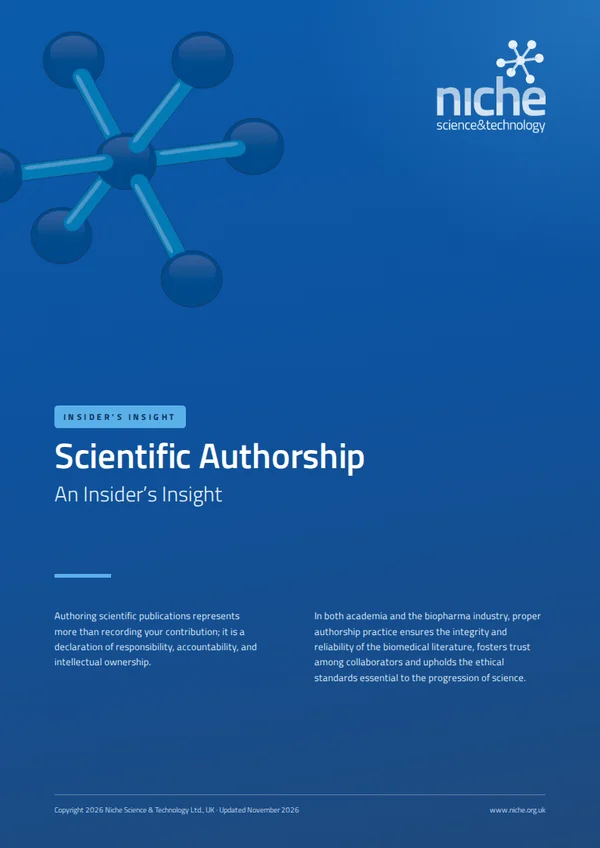
Authorship
For research teams: how to navigate authorship decisions and avoid disputes.
Download the free guideClinical Operations
Clinical Project ManagementStudy Monitoring and Site ManagementTrial Master File and Document ManagementQuality and Vendor Management SystemsStudy DocumentsRegulatory Affairs
Regulatory StrategyRegulatory WritingAgency Communications and SubmissionsDocument Editorial, QC and SubmissionQC, Review and RedactionLegal RepresentationPharmacovigilanceILAP SubmissionsMedical Communications
Publication PlanningStrategic CommunicationsScientific CommunicationsMedical EducationMedical IllustrationGrant Applications and Project PartnershipInsider’s Insights / Plagiarism and Integrity
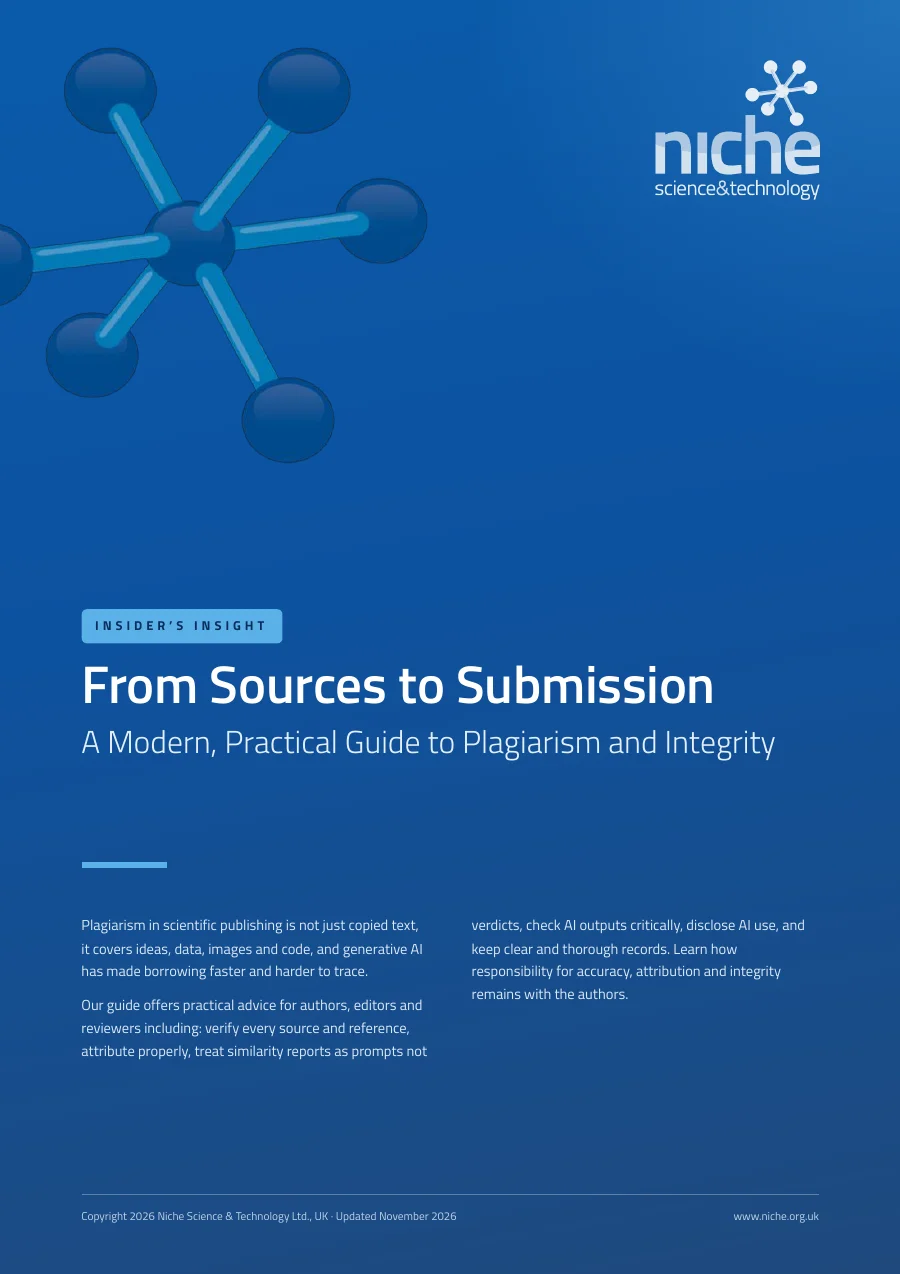
Plagiarism in scientific publishing is not just copied text: it covers ideas, data, images and code, and generative AI has made borrowing faster and harder to trace. This guide gives authors, editors and reviewers practical steps to keep sources traceable and attribution honest.
Six things you will be able to do after reading this guide.
Ideas, interpretations, data, methods, code and figures, not only copied words.
Common knowledge versus specific findings, and why original sources beat citation chains.
Why an LLM paraphrase still needs its source, and how to check AI references.
Reusing your own methods and findings without misleading readers or breaching policy.
A score is a prompt for review, not a verdict, and tools have blind spots.
Who owns verification, permissions, AI disclosures and final approval.
Three quick questions taken from the guide. Test what you already know.
0of 3 correct so far
Question 1 of 3
According to Crossref, what does iThenticate check for?
Question 2 of 3
If an LLM rewrites a paragraph taken from a published paper, does it still need a citation?
Question 3 of 3
What does Crossref advise about similarity score thresholds?
The guide covers each of these in depth, from AI-assisted writing to editorial process.
Download the free guideA few of the 16 pages, so you know exactly what you are getting.


Usually, yes, if the paragraph still communicates an idea, finding or interpretation taken from that paper. A citation acknowledges the source of the intellectual content, not just the wording. Do not use AI to disguise the origin of copied material.
No. It means the tool found text matching material in its database. Correctly cited quotations, references, standard methods and common technical phrases may all contribute. Conversely, plagiarism may occur without extensive verbatim overlap. Treat the report as a screening aid, not a verdict.
The people submitting the manuscript. An LLM cannot take authorship responsibility or answer an editor’s questions about a source. Verify references and scientific claims before submission, and correct errors transparently if they are discovered later.
Start with the relevant policy and use only tools approved for the material involved. Do not upload confidential or sensitive information to an unapproved service. Use AI for a clearly defined task, keep source records, check the output against the original evidence and follow the journal’s disclosure requirements.
Who qualifies as an author, and how to avoid disputes before they start.
Manuscripts, resubmissions and responses to reviewers, with every source and claim checked.
Editing, quality control and formatting of clinical and regulatory documents before submission.
For research teams: how to navigate authorship decisions and avoid disputes.
Download the free guide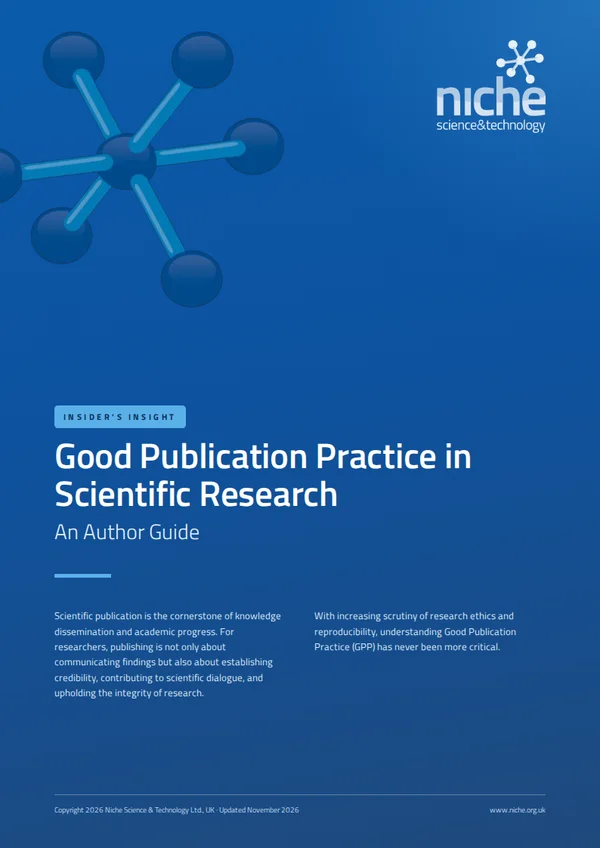
For authors and sponsors: the principles of authorship, ethics and transparency every paper should follow.
Download the free guide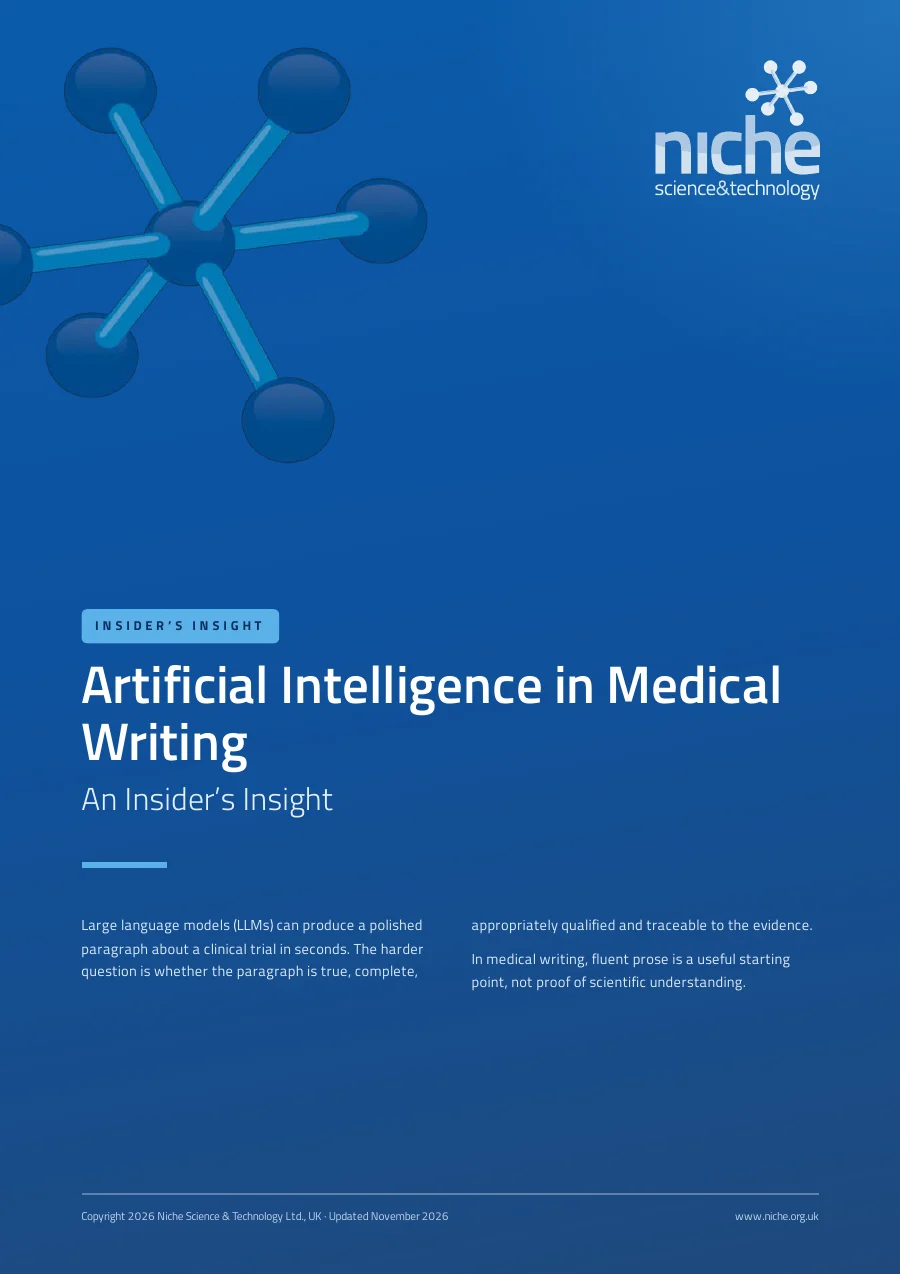
For medical writers and their managers: where large language models help, where they fail, and how to use them with verification, disclosure and accountability.
Download the free guide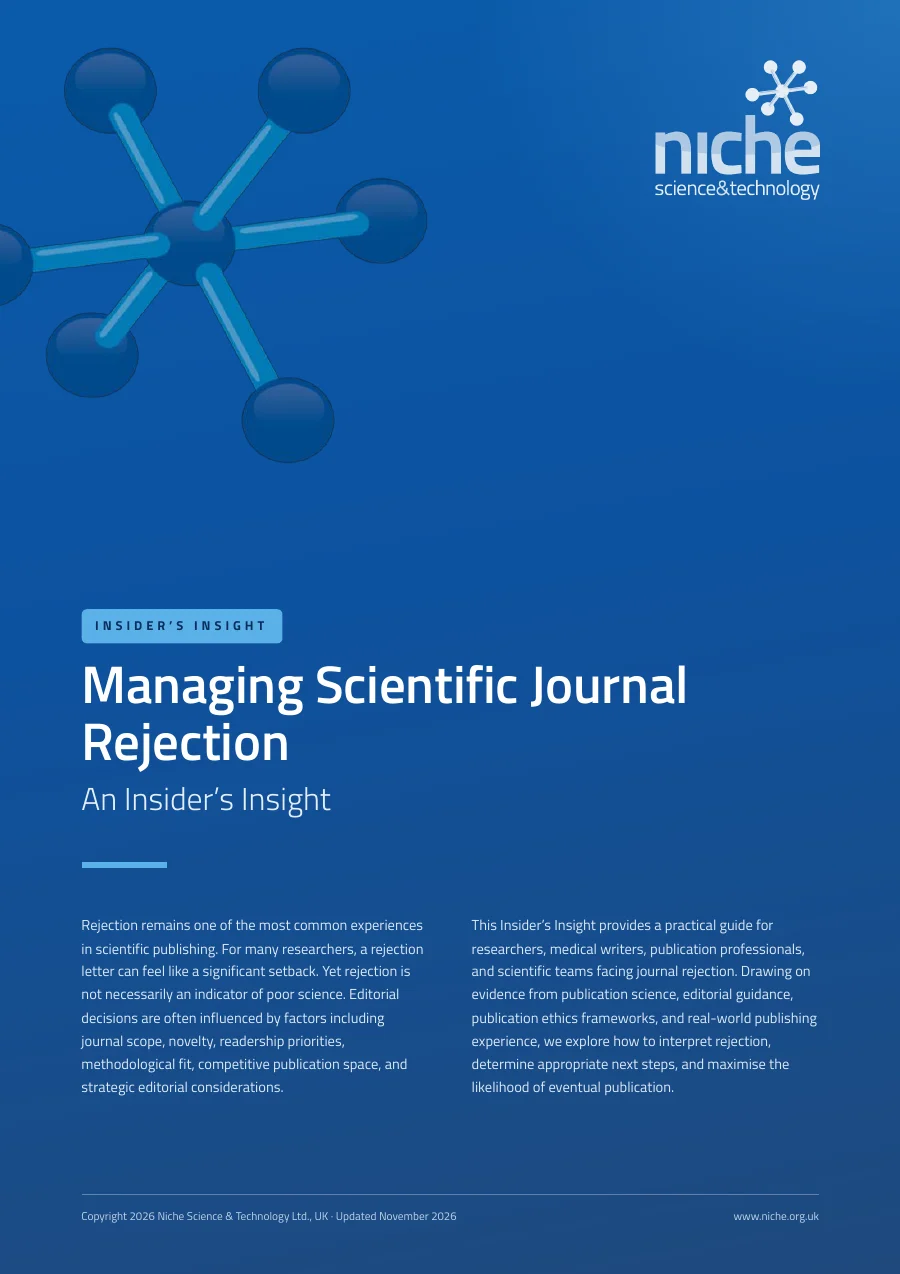
For authors and publication teams: how to read a rejection, decide whether to appeal, respond to reviewers and choose the next journal.
Download the free guideResources
Social


Contact us
Address
Niche Science & Technology
Unit 26 Falstaff House
Bardolph Road
Richmond TW9 2LH
United Kingdom