On the evening of Wednesday, 4 May 2016, I was involved in a road traffic accident that could easily have ended very differently. Writing this a week later, sitting at home with my family while my body slowly knits itself back together, I find myself filled less with frustration about the pain and more with an overwhelming sense of gratitude. If a number of wonderful people had not been there that night—complete strangers who stopped, checked I was alive, called for help, and stayed with me—I doubt I would be here now recovering in the comfort of home. Their actions were immediate, instinctive, and generous. They did not know me, yet they acted as though they did. The experience moved me so deeply that I felt compelled to write about it in detail shortly afterwards in my earlier post on the NICHE website. I needed to tell as many people as I could that the best in people is still alive and well, quietly achieving amazing things every day. The evening reminded me that compassion often appears most vividly in moments of crisis.
In a small way, I hope sharing the story helps to thank the people who helped me that night—most of whom I will probably never see again. The internet is a strange place for gratitude, but it seemed the only way I could send a message of thanks out into the universe, through the ether, in the hope that it might somehow reach them.
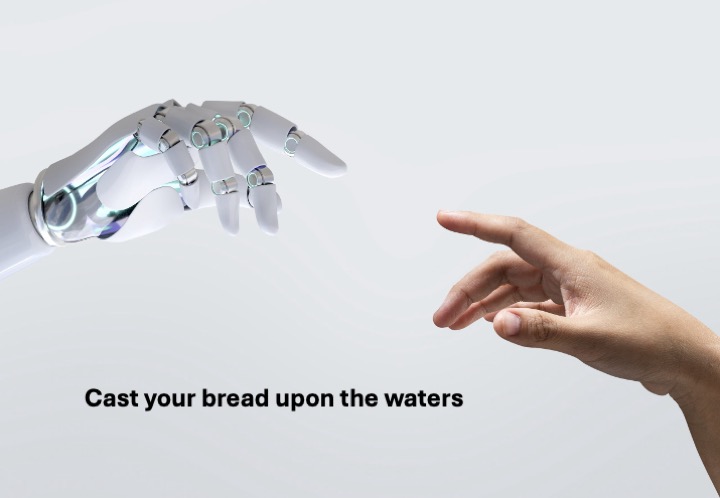
Although I am not particularly religious, one saying has always stayed with me since my days at Methodist Sunday School: “Cast your bread upon the waters.” The passage in Ecclesiastes 11:1–6 has always resonated with me. The way I have interpreted it throughout my life is simple: give of yourself freely, without expecting anything in return, and somehow the world will repay that generosity in time. I have always understood that the reward promised was spiritual rather than material. It is less about transactions and more about the quiet accumulation of goodwill in the world.
Friends and colleagues often tell me that I give too much of my time and energy to others. Perhaps they are right. But moments like last Wednesday make me think that the old saying still makes sense, at least to me. I have always found it to be a beautiful promise, and I remain content with my interpretation of it, whatever theologians may say about the finer points.
Since posting my original story, I have been genuinely touched by the responses. Many people wrote back with kind, supportive, and spiritually uplifting words. It seems that gratitude itself can be infectious. When people see someone expressing thanks sincerely, they often feel moved to respond in kind. The positivity spreads outward—much like the painkillers currently spreading gently through my bloodstream. For those who have asked how things are going: healing is slow and painful, but the world still seems like a very good place.
Interestingly, science increasingly supports the power of gratitude that many traditions have spoken about for centuries. Psychological research suggests that the benefits of practicing gratitude are remarkably wide-ranging. People who regularly take time to reflect on what they are thankful for tend to experience more positive emotions, feel more alive, sleep better, and express greater compassion and kindness toward others [1][2]. Some studies even suggest that gratitude may be linked to stronger immune functioning and improved physical health [3].
What is particularly striking is that gratitude does not need to be reserved for dramatic life events. We might feel thankful after receiving a promotion or achieving a major goal, but gratitude can also arise from something as simple as a good conversation or a slice of excellent pie. Research by Robert Emmons at the University of California, Davis demonstrates that keeping a simple gratitude journal, writing brief reflections on things we are thankful for, can significantly increase well-being and life satisfaction [1]. You would think findings like this would motivate even the most reluctant cynic into action. Yet if you are anything like me, that motivation can be fleeting. I have started more gratitude journals than I care to admit, and most of them lasted about three evenings before they lost out to watching stand-up comedians on Netflix.
Still, I have discovered a few ideas—supported by research—that help maintain the habit.
First, it helps to notice new things each day. Gratitude journaling works because it subtly shifts our attention. Writing “I’m grateful for my family” every day is meaningful, but noticing a specific moment—such as someone offering a kind gesture when you needed it—keeps the mind alert for fresh reasons to be thankful.
Second, it is helpful to acknowledge obstacles. Psychologists describe a technique called mental contrasting, which involves being optimistic about the benefits of a new habit while realistically anticipating the challenges that might derail it [4]. If evenings are too exhausting, write in the morning instead.
Finally, gratitude becomes far more powerful when it involves other people. Our relationships remain the greatest contributors to happiness, and expressing gratitude directly to others deepens both the feeling and the connection [2].
Looking back at that night on the road, it strikes me that the most powerful expression of gratitude may simply be passing kindness forward. If those strangers taught me anything, it is that the best of humanity is never very far away. And for that, I remain profoundly grateful.

Get our latest news and publications
Sign up to our news letterResources
Social


Contact us
Address
Niche Science & Technology
Unit 26 Falstaff House
Bardolph Road
Richmond TW9 2LH
United Kingdom