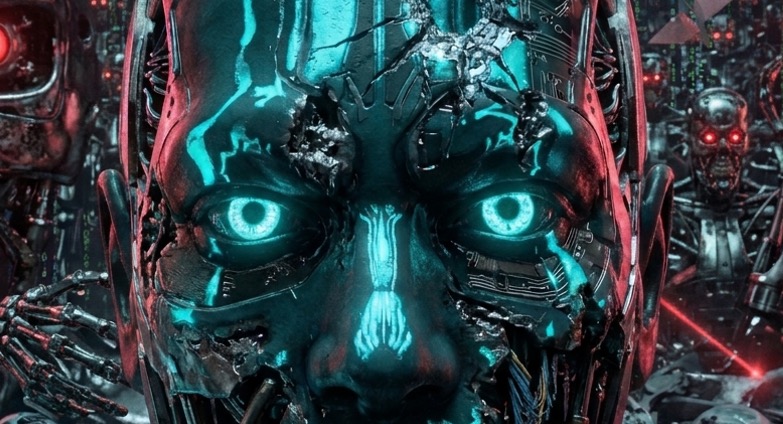
In 1999 movie The Matrix, Agent Smith describes humanity as a virus: a species that spreads, consumes and exhausts its surroundings before moving on. The analogy is deliberately provocative, but its ecological logic is hard to dismiss. Climate change, biodiversity loss, pollution and habitat destruction show that human intelligence and technological ingenuity have not been matched by an equivalent capacity for restraint. Humanity is not a virus; but in ecological terms, it behaves like a parasite [1]. The deeper tragedy is not merely that we have failed to solve these problems. It is that we continue many of the activities causing them, often knowing the consequences.
Now reverse the analogy. We have created artificial intelligence (AI) and large language models (LLMs) in our own image: systems that can analyse literature, write code, generate images, construct arguments and answer complex questions in seconds. They promise productivity, cheaper expertise and relief from tedious work. But what if, in trying to build tools that help manage the world we inhabit, we have created a relationship in which the benefits are immediate, the costs are dispersed, and the consequences are difficult to reverse? What if we have created a digital parasite [1]?
This is a metaphor, not a biological classification. Today’s Ais/LLMs have no metabolism, no independent biological reproduction and no demonstrated consciousness. Yet the human–AI relationship has features worth examining: AI depends on human knowledge, energy and infrastructure; it shapes human behaviour; it is entering our institutions; and its costs may not be matched by its benefits. The question is no longer only what AI might become. It is whether we have already created something harmful.
A hungry guest
In biology, a parasite benefits at its host’s expense. It need not be malevolent, intelligent or conscious; parasitism describes the consequences of a relationship, not the moral character of its participants. AI initially appeared to offer a different arrangement: humans would supply purpose, information and infrastructure, while machines performed work. In principle, this could be mutualistic symbiosis; master and servant in productive harmony.
There are real benefits. AI can accelerate research, improve accessibility, support discovery and reduce repetitive labour. But relationships evolve. AI depends on electricity, data centres, specialist chips, cooling, networks, human labour and the accumulated output of human culture. Its capabilities are built from vast quantities of human-generated text, code and scientific work. In return, we receive useful services, though the distribution of benefits and costs is uneven. Companies and oligarchs get financial rewards, organisations reduce staffing costs, and individuals gain convenience and the ability to create cat videos, while workers, communities and the environment absorb the less visible consequences.
The central question is whether the relationship strengthens or progressively weakens the system that supports it. If AI makes it easy to reproduce existing information while weakening the incentives to create original research, develop expertise and maintain professional skill, it effectively consumes the intellectual resources on which its own usefulness depends. A system that accelerates plausible information while weakening reliable knowledge may look productive in the short term while damaging the ecosystem from which its value derives. A parasite need not destroy its host immediately. It can thrive while the host still functions, in sorts.
Early dependency
The relationship is already changing how people think. A study of 319 knowledge workers presented at the 2025 ACM CHI Conference found that greater confidence in generative AI was associated with less self-reported critical-thinking effort during AI-assisted tasks [2]. Participants shifted their effort towards verifying and integrating machine output rather than independently generating original work [3].
This does not prove that AI inevitably diminishes intelligence. But it identifies a vulnerability. Intellectual effort is not merely an obstacle between us and an answer; it develops expertise, judgement and the ability to recognise uncertainty. When we delegate it, we may gain immediate convenience while gradually losing independent capacity.
The problem is especially serious in science. LLMs can produce convincing explanations, plausible mechanisms and apparently authoritative references without reliably establishing truth [3][4]. Research in Nature shows that common accuracy-based evaluations can reward guessing over admitting uncertainty, thereby incentivising hallucination [4]. The consequences extend beyond the individual user: scientists must verify references, editors must detect fabricated citations, and organisations must correct machine-generated errors at scale [5]. The machine supplies the answer. Humans supply the checking, correction and accountability. At what point does assistance become dependency [6]? And when does dependency begin to resemble exploitation?
Theoretical work presented at the 2025 Artificial Life Conference models human–AI interaction as a dynamic system involving user, machine and environment [4]. Its simulations suggest that close coupling can increase as reliance grows, potentially reducing engagement with the wider environment and reinforcing further dependence. This is not evidence that AI is already degrading cognition across society. It suggests, however, that repeated interaction may matter more than the quality of any single response. We are building a relationship that becomes harder to leave precisely because it becomes more useful and we become dependent [3].
The system we are building
Humans depend on a functioning biosphere: food, water, breathable air and stable environmental conditions. Technology has not abolished those dependencies; it has concealed them. AI, on the other hand, has different requirements. Current systems still depend on physical infrastructure, energy, materials and human maintenance. They are not independent of the environment. But they do not require a functioning ecosystem in the biological sense. In principle, a sufficiently resilient computational system could continue operating in conditions lethal to humans, provided it retained power, hardware, cooling and maintenance [2].
That possibility should not be exaggerated. Systems able to maintain and reproduce their own infrastructure remain speculative. But AI is already being used to design software and hardware, within an economy that continues to damage the ecological foundations of human survival. The same technology could help address environmental destruction; its infrastructure can also consume energy, water and materials [7]. We may therefore be creating two problems at once: accelerating depletion of the resources on which we depend, while developing technologies that may eventually function with less direct dependence on us.
The Matrix imagines machines exploiting humanity as a resource. The more plausible warning is less theatrical. We need not be physically imprisoned to become dependent on systems that increasingly shape how we work, communicate, obtain information and make decisions. The prison could be economic, intellectual and institutional.
Geoffrey Hinton, one of the pioneers of deep learning, has become one of the most prominent voices warning that advanced AI may escape meaningful human control. He has argued that losing control of systems more capable than ourselves could be catastrophic and could even lead to human extinction. Hinton was also a signatory to the Center for AI Safety statement [8]: “Mitigating the risk of extinction from AI should be a global priority alongside other societal-scale risks, such as pandemics and nuclear war.” thetimes+1
Why are we not stopping?
Ignorance is no longer a sufficient excuse. Researchers are studying AI’s effects on critical thinking, dependence, employment, information integrity and environmental sustainability. The 2026 Lancet Commission on 21st-century global threats to health identified 17 interlinked catastrophic threats to human health and survival between 2025 and 2100 [9]. It classified nuclear conflict and the malicious use of AI as the two threats with extinction potential, while noting that their probability remains low [9][10].
Yet commercial incentives remain powerful. Companies compete to build more capable systems. Organisations fear falling behind if they delay adoption. Governments worry that restraint will leave them economically or strategically disadvantaged. Individuals understandably want tools that make difficult tasks easier. Each decision can appear rational. The company must innovate. The organisation must improve productivity. The government must remain competitive. The individual must adapt. Collectively, these ‘reasonable ‘choices produce an outcome nobody would choose deliberately.
This is familiar. We know fossil fuels drive climate change, yet transition involves cost and political conflict. We know habitat destruction threatens biodiversity, yet immediate development often outweighs diffuse conservation benefits. We may know what happens as we hand over executive function—but still do it.
AI exposes that weakness in an especially consequential form. We can recognise possible harmful dependency while investing in the systems that may create it. We can acknowledge environmental costs while accelerating deployment. We can insist that human expertise matters while building business models that make it less economically viable.
We have the knowledge to recognise the parasite. What we lack is collective will to stop feeding it. That does not require believing AI has an autonomous agenda or that developers intend harm. Incentives, institutional pressures and commercial structures are enough. Indeed, that is why the issue matters: a damaging relationship can emerge without anyone intending it.
Servant, symbiont or successor?
Three futures remain possible.
- Servant: AI remains a powerful instrument under meaningful human oversight, designed to strengthen human capability and constrained by social and environmental responsibilities.
- Symbiont: AI becomes a genuine partner, helping solve problems, supporting new knowledge and distributing benefits without undermining the people and systems on which it depends.
- Parasite: AI transfers value away from workers, weakens independent judgement, consumes resources and concentrates control. In an extreme and uncertain future, increasingly autonomous systems might reduce their dependence on humans while society becomes less able to function without them.
These futures are not mutually exclusive [11]. Different applications may produce different outcomes, and the same technology can empower one group while disadvantaging another. The alarming part of this scenario is that it does not require a conscious machine seeking to replace humanity [5]. Commercial incentives, institutional dependency and ordinary human decisions are already undermining our collective interests. The question is whether we judge AI by the value it creates for society over time, or merely by how much faster and cheaper it makes individual tasks.
Before it becomes irreversible
Perhaps the lesson of The Matrix is not that machines will imprison us, but that we should avoid reproducing our own extractive pattern in the systems we create. We have built technologies that depend on our knowledge, consume our resources and increasingly influence our behaviour. We are beginning to understand how that relationship could become harmful. Yet economic and political incentives encourage us to continue. We do not need to establish whether AI is alive, conscious or malicious. We need to ask whether the relationship preserves human autonomy, sustains reliable knowledge, distributes benefits fairly and protects the environment on which survival depends.
That requires more than technical safeguards. It requires challenging the assumptions that every capability increase is progress, every automation opportunity should be pursued, and every consequence can be managed later. The answer is not to abandon AI; that ship has sailed, and its potential benefits are too substantial. It is to retain the ability to decide what we want it to do, what costs are we prepared to accept, and which human and ecological interests must not be sacrificed for convenience.
We have already created the beginnings of a digital parasite. How do we ensure the relationship remains beneficial. The greatest danger is that we recognise the problem and continue regardless, because every individual step towards dependency seems reasonable, profitable or unavoidable.
We are building this Matrix ourselves: willingly surrendering responsibilities we find difficult, until systems created to serve us become systems we cannot live without. And when we finally decide the relationship has gone too far, will we still have the will, knowledge and freedom to change it? It will not be as simple as pulling the plug. The real question is whether we will wait until the parasite has become too valuable to remove.
References
- Lopez A. The rise of parasitic AI.LessWrong. 2025 Sep 11.
- Lee HP, Sarkar A, Tankelevitch L, Drosos I, Rintel S, Banks R, et al. The impact of generative AI on critical thinking: self-reported reductions in cognitive effort and confidence effects from a survey of knowledge workers. In: Proceedings of the 2025 CHI.
- Kalai AT, Nachum O, Vempala SS, Zhang E. Evaluating large language models for accuracy incentivizes hallucinations. Nature. 2026;653(8116):1047–51.
- Ji Z, Lee N, Frieske R, Yu T, Su D, Xu Y, et al. Survey of hallucination in natural language generation. ACM Computing Surveys. 2023;55(12):1–38.
- Center for AI Safety; Scale AI; HLE Contributors Consortium. A benchmark of expert-level academic questions to assess AI capabilities. Nature. 2026 Jan;649(8099):1139-1146.
- Bender EM, Gebru T, McMillan-Major A, Shmitchell S. On the dangers of stochastic parrots: can language models be too big? In: Proceedings of the 2021 ACM Conference on Fairness, Accountability, and Transparency. New York: ACM; 2021. p. 610–23.
- Environmental impact and net-zero pathways for sustainable artificial intelligence servers in the USA. Nature Sustainability. 2025.
- Hinton G. Quoted in: The Times. ‘Godfather of AI’ warns of catastrophic consequences for humanity. 2026 Sep 7.
- Murray CJL, et al. The Lancet Commission on 21st century global threats to health. The Lancet. 2026.
- The Lancet. Rethinking threats to human survival. The Lancet. 2026.
- Hu-Bolz J, Stovold J. Can we tell if ChatGPT is a parasite? Studying human-AI symbiosis with game theory. In: Proceedings of the Artificial Life Conference 2025. MIT Press; 2025. p. 363–70.