The persistent challenge in drug development has long been its high attrition rate, with late-stage failures frequently tracing back to suboptimal dosing. However, this well-known problem understates the broader value of Model-Informed Drug Development (MIDD). MIDD represents a profound reorientation of how evidence is generated, evaluated, and integrated into decision-making across the entire pharmaceutical lifecycle [1]. Over the past two decades, MIDD has moved from niche methodological discussions to a transdisciplinary applied science, demonstrating impact from candidate selection to lifecycle management.
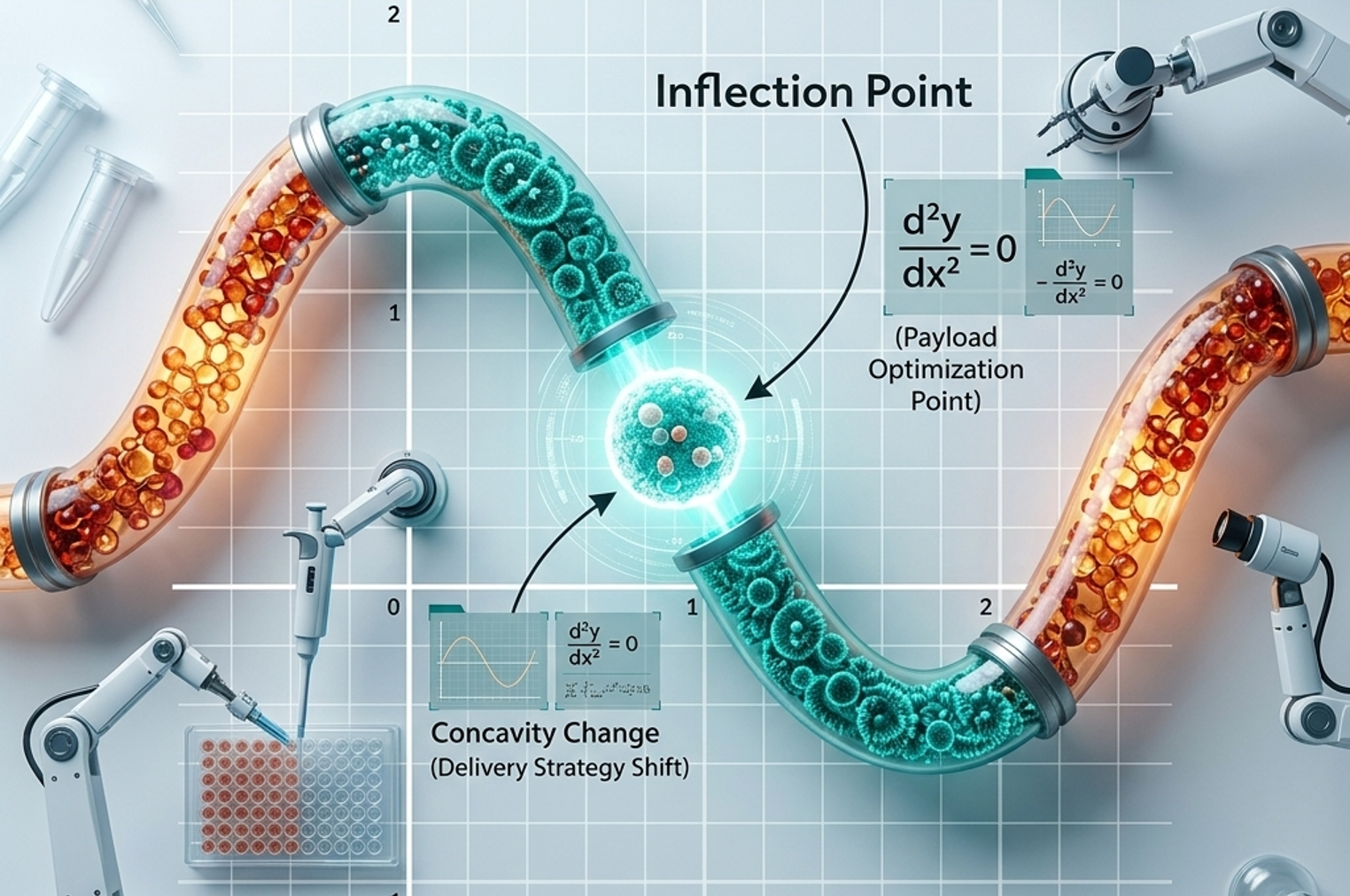
The year 2026 represents an inflection point, defined by the institutional maturation of quantitative reasoning. The FDA's Quantitative Medicine Center of Excellence (QM CoE), the expansion of the MIDD Paired Meeting Program, and the finalization of the ICH M15 guideline have created a durable infrastructure for model-informed decision-making [2]. This enables a shift from asking "what happened?" in past trials to predicting "what is most likely to happen?" in future patients. AI operates within a framework prioritizing decision context, transparency, and risk-based evaluation.
How will PK/PD modelling, Bayesian frameworks, and AI-augmented analytics serve to deliver a methodological advance grounded in regulatory science? The true transition is from empirical dose escalation to model-guided precision dosing, enabled by cultural and organizational changes decades in the making.
MIDD's widespread adoption has been driven by a compelling business case. Key economic drivers include reducing technical risk, increasing probability of technical success (with comprehensive PK/PD packages increasing proof-of-mechanism success from ~33% to 85%) [3], enabling earlier "kill" decisions, improving capital efficiency, optimising portfolios, shortening development timelines by approximately ten months per program [4], and boosting investor confidence. As Zineh [1] notes, many historical barriers to MIDD have been cultural, and the economic rationale has been crucial in overcoming them.
Contemporary MIDD rests upon three interconnected pillars. Advanced PK/PD modelling has evolved from descriptive curve-fitting to mechanistically grounded simulation, with PBPK and QSP frameworks enabling extrapolation across populations. Bayesian dose-finding frameworks provide the inferential engine for learning from accumulating data, with Bayesian PopPK-guided dosing improving target exposure attainment compared with traditional monitoring [5]. AI-augmented analytics have entered the toolkit, with deep learning identifying complex, nonlinear relationships [6]. However, regulatory guidance emphasises that any modelling approach must be anchored to a clear question of interest, defined context of use, and explicit assessment of model risk [1].
Integration generates practical capabilities: earlier detection of exposure–response relationships using virtual patient populations [1]; real-time dose adjustment being tested in prospective trials [7], with PK models predicting future concentrations and enabling correct dose recommendations for over 80% of patients [5]; and more precise estimation of therapeutic windows [8].
A fourth capability is emerging: integrating biomarker data into quantitative pharmacology. This includes pharmacodynamic biomarkers, omics data, imaging biomarkers, digital biomarkers from wearables, and surrogate endpoints. This enables identification of patient subgroups, prediction of individual responses, and design of biomarker-driven adaptive trials.
MIDD will increasingly integrate real-world evidence from EHRs, wearables, home monitoring, registries, and synthetic control arms for Bayesian updating and validation [9]. The concept of ‘virtual patients’ is evolving into sophisticated ‘digital twins’, dynamic, personalised computational models enabling virtual populations, adaptive simulations, personalised dosing, and learning healthcare systems [10].
Traditional empirical dose escalation provided limited learning. The model-guided paradigm transforms dose finding into continuous learning. The FDA's MIDD Paired Meeting Program has been a catalyst, with 62 companies participating and savings estimated at $1.6 billion and over a century of development time [1][11]. The ICH M15 guideline provides a global framework for principled, transparent, and decision-relevant quantitative reasoning.
As an example, comparative analysis of warfarin PK/PD using hypothesis-driven versus deep-learning approaches showed both yielded comparable dose estimates [6]. This demonstrates complementary use of multiple approaches: mechanistic models provide interpretability; deep learning identifies patterns without pre-specified functional forms.
Significant implementation barriers remain: fragmented datasets, incompatible software, organisational silos, shortage of pharmacometricians, and need for clinician education. Robust AI governance requires Good Machine Learning Practice, model lifecycle management, algorithm drift monitoring, continuous validation, audit trails, human oversight, and cybersecurity. The evidence base for AI-guided dosing remains predominantly retrospective [5], and harmonised regulatory guidance is still developing.
While the FDA has led, MIDD is truly global, with EMA, MHRA, Health Canada, and PMDA actively engaged. ICH M15 serves as a crucial harmonising framework. Ultimately, MIDD benefits patients through safer dosing, fewer adverse events, reduced trial burden, more personalised therapies, and faster access to medicines.
The integration characterising 2026 pharmaceutical research represents a genuine methodological advance that has been decades in the making. The next decade will be defined not by more sophisticated algorithms but by seamless integration of mechanistic science, human expertise, and continuously learning quantitative systems. Successful organisations will embed quantitative reasoning throughout drug development. MIDD represents a fundamental shift in how evidence is generated, interpreted, and translated into better medicines for patients worldwide.
References

Get our latest news and publications
Sign up to our news letterResources
Social


Contact us
Address
Niche Science & Technology
Unit 26 Falstaff House
Bardolph Road
Richmond TW9 2LH
United Kingdom