The scientific journal has long occupied a privileged position at the centre of scientific communication [1]. Publication in peer-reviewed journals became the accepted mechanism for validating discoveries, establishing priority, and building scientific reputations. Yet, there are increasing signs that this model is struggling under the weight of its own monopoly. The future of science communication appears to be becoming progressively less dependent on traditional journals and more reliant on direct, rapid, visual, and socially mediated forms of communication.
The warning signs had been evident for years. As researchers, we have been investing extraordinary amounts of time and resources in manuscript preparation, submission, revision, and resubmission. Publication delays had long been recognised as a significant impediment to the dissemination of scholarship, with review and publication processes often stretching over many months (or even years) [2]. At the same time, editors have been reporting increasing difficulty in recruiting qualified peer reviewers, resulting in growing concerns about reviewer fatigue, review quality, and the sustainability of the peer-review system itself [3][4].
We are seeing these challenges against a backdrop of increasing commercialisation within scientific publishing. Many publishers enjoy substantial profit margins while relying heavily on the unpaid labour of authors, reviewers, and academic editors. Researchers frequently find themselves paying article processing charges to make their work openly accessible, while institutions paid substantial subscription fees to access the same literature. For many scientists, the overall service provided by the publishing industry is increasingly difficult to justify.
The persistence of scientific conferences after the COVID pandemic provides an important clue regarding these frustrations. Conferences have long served as a mechanism for communicating emerging findings before they navigate the slow-moving publication pipeline. Scientists value opportunities to discuss results directly with peers, receive immediate feedback, establish collaborations, and shape scientific debate in real time. In many respects, conferences represent a recognition that scientific communication has always required channels beyond the formal journal article.
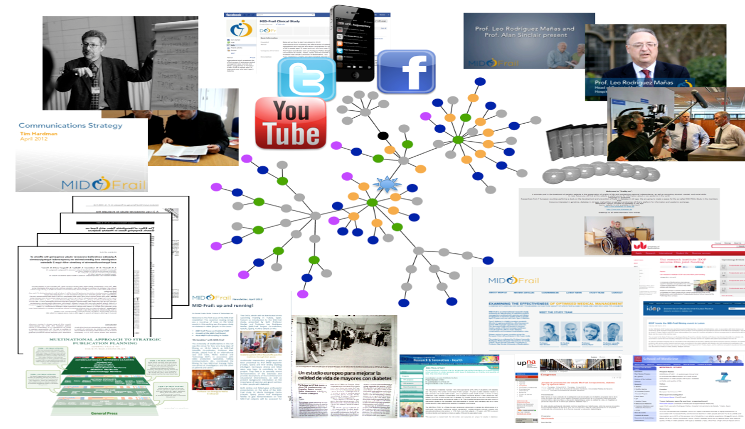
Increasingly, researchers are exploring even broader approaches to dissemination. Communication strategists advocate repurposing research findings into blogs, podcasts, infographics, video abstracts, interviews, newsletters, social-media content, visual summaries, and educational materials [1]. The principle is simple: create once, communicate many times. Scientific manuscripts clearly remain important archival records, but they are just one component of a much larger communication ecosystem.
This evolution is occurring simultaneously with a profound transformation in how society is consuming information. The Reuters Institute Digital News Report 2024 documents a global shift toward social, video-led, and creator-driven news consumption [5]. Traditional news organisations no longer control access to audiences. Instead, platforms such as YouTube, Instagram, and TikTok allow individuals to build audiences numbering in the millions with relatively modest resources.
This represents perhaps one of the most significant shifts in information dissemination since the emergence of radio and television journalism in the twentieth century. Information exchange is becoming faster, more visual, more personal, and increasingly shaped by algorithms. Short bursts of content competed for attention in endlessly scrolling feeds across a broad range of ‘channels’. Reach is now determined less by institutional authority and more by audience engagement.
The implications for science communication are profound.
We have been witnessing the emergence of science influencers, medical communicators, and specialist commentators who built substantial audiences by providing freely accessible scientific explanations and guidance. Some of these communicators possess traditional scientific credentials; others don’t. What distinguishes them is their ability to translate complex ideas into accessible, engaging formats – even if wrong.
Perhaps even more striking has been the emergence of ‘PhD influencers’ documenting laboratory life, fieldwork, academic careers, and scientific discoveries through TikTok and Instagram. Check out Andy Stapleton on YouTube (https://www.youtube.com/@DrAndyStapleton). Younger scientists appear increasingly comfortable communicating through platforms previously viewed as informal or recreational. For many members of Generation Z, social media had become a primary source of news and information, often displacing traditional news websites and applications [5].
The Reuters Institute reports that video-based platforms, particularly YouTube, Instagram, and TikTok, are becoming increasingly important gateways to news consumption among younger audiences [5]; something we have also advised (though perhaps not TiKTok) [1]. Individual creators frequently attracted greater engagement than established news organisations, some of which younger audiences viewed as difficult to understand, irrelevant, or politically biased [5].
Artificial intelligence has introduced another layer of complexity. AI-assisted writing tools are already influencing journalism, marketing, and scientific communication. Articles, summaries, press releases, and educational content can be generated rapidly and at unprecedented scale. While these technologies promise efficiency gains, they also raised important questions regarding accuracy, transparency, attribution, and trust [5].
The boundaries between news, opinion, entertainment, education, and promotion are becoming increasingly blurred. Similarly, the distinction between authentic expertise and persuasive performance is becoming more difficult to discern. This presents particular risks for science communication.
The same platforms that have enabled excellent science communicators to reach global audiences have also provided opportunities for misinformation. Vaccine sceptics, climate-change deniers, wellness influencers, and conspiracy theorists are achieving extraordinary visibility. Financial incentives embedded within platform algorithms often reward controversy, certainty, and emotional engagement over nuance and evidence and the scientific narrative.
Unlike scientific publications, influencer content frequently lacks formal referencing and source attribution. The scientific ‘claims’ they make are often presented without citations, contextualisation, discussion of limitations, or acknowledgement of uncertainty. This creates significant challenges for audiences attempting to distinguish evidence-based conclusions from speculation or misinformation.
Consequently, scientists face a dual responsibility. It is not enough simply to communicate our own findings through emerging channels. Researchers must also actively participate in defending evidence-based reasoning, correcting misinformation, and promoting scientific literacy. The integrity of future science communication depends as much on engagement within these new information ecosystems as on publication within traditional journals.
Of course, social-first communication has limitations. A typical 3-minute video might contain approximately 600–700 words of spoken content. That is rarely sufficient to communicate the full context, methodology, limitations, significance, and evidential basis underlying a complex scientific finding. Yet attention economics increasingly favours brevity. Average engagement times continue to shrink, forcing communicators to distil messages into their most essential forms. And you better make the visuals more than talking heads!
Nevertheless, when executed effectively, narrative storytelling, visual abstracts, animation, podcasts, infographics, and short-form video can be remarkably powerful educational tools. Research consistently demonstrates that visual communication enhances engagement, comprehension, and recall [6]. Scientific communication may therefore become simultaneously more accessible and more dependent upon communicator skill.
Looking forward, barring some unforeseen technological revolution (smellyvision?), social-first and highly visual communication appears likely to become the dominant form of public information exchange. Scientific journals will undoubtedly persist as archival repositories and mechanisms of record. However, their monopoly over scientific communication seems increasingly unsustainable.
Ironically, the scientific publishing industry may have contributed to its own decline. Excessive costs, publication delays, reviewer shortages, and barriers to access have encouraged researchers to seek alternative routes to visibility and influence. If current trends continue, it would not be surprising to see scientific publishers themselves evolving into multimedia content organisations, competing for attention on YouTube, TikTok, podcasts, and emerging platforms. Can you imagine Nature on TikTok?
The future of science communication will not be determined solely by who publishes the best science. Increasingly, it will be determined by who communicates it most effectively. Researchers and publishers alike must recognise that the future of fact-based communication, and perhaps public trust in science itself, depends upon our ability to adapt.
References

Get our latest news and publications
Sign up to our news letterResources
Social


Contact us
Address
Niche Science & Technology
Unit 26 Falstaff House
Bardolph Road
Richmond TW9 2LH
United Kingdom