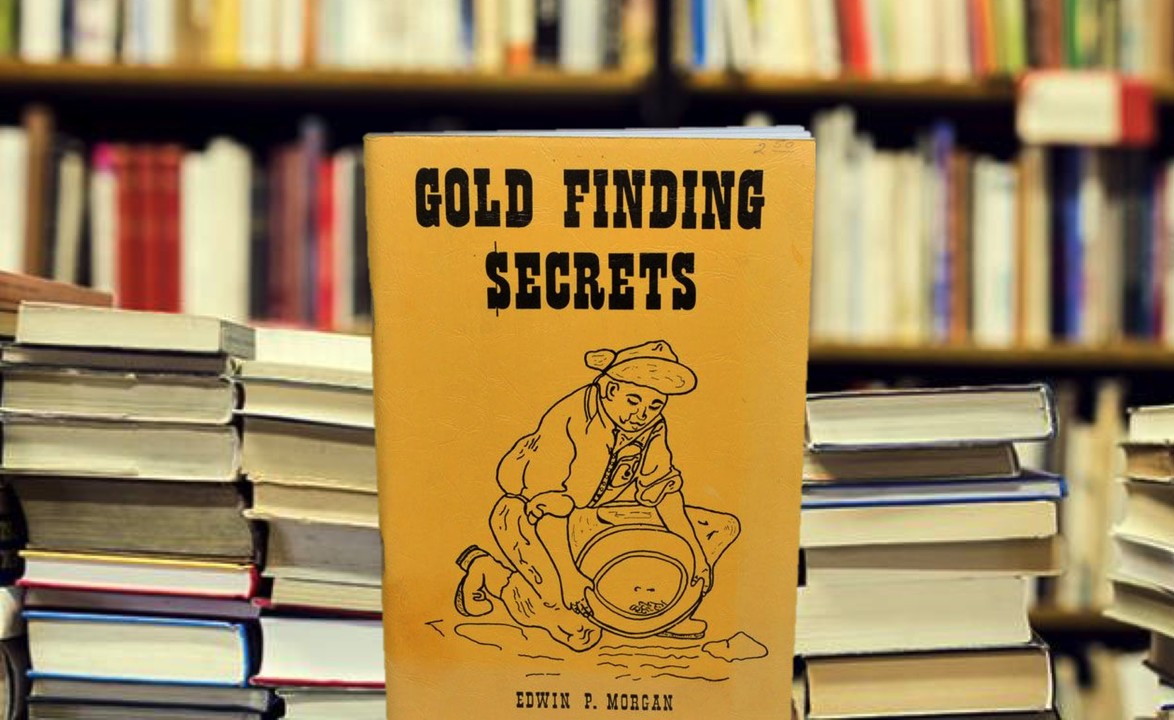
Important science isn't always sexy. And, as I have commented previously, some research never gets cited in the literature. Taken as a whole, much of our amassed knowledge, from science to business to philosophy, is dull. The majority of our musings over the last 10,000 years is out-dated, opinionated or simply wrong. And yet, Shakespeare, Dickens and Verne are hidden within. Nuggets of gold are waiting to be found, if you are prepared to dig.
The same can be said for the scientific literature. However, despite the availability of online databases and complex search algorithms, you cannot ask software to search out elegant scientific manuscripts, at least not yet.
If you are looking for the best manuscripts ever written, you might review the most highly cited manuscripts. Sadly, these tend to be pretty dull. For example, the most highly cited manuscript, with more than 300,000 citations, details protein measurement with the Folin phenol reagent from 1951, a rather uninspiring read [1]. Many of the world's most famous papers, including Einstein's special theory of relativity, the determination of the DNA double helix and the discovery of high-temperature superconductors, do not make it into the top 100 most cited publications. The top 100 list is dominated by protein biochemistry publications and popular lab techniques such as PAGE, Western blot and protein chromatography.
Citation count, it turns out, is a poor measure of literary quality [2]. A paper can be cited endlessly because it describes a workhorse method, not because it is beautifully written or conceptually transformative. The most cited papers are often the most functional, not the most inspiring.
We have to find the gold for ourselves. I started collecting what I thought were great manuscripts over 30 years ago and now have a collection of more than 50. I have a spring clean every few years, as papers reporting scientific advances tend to age quickly. I could not identify a single common characteristic from all the manuscripts I have collected. And not every aspect of them is perfect, though, in a way, their imperfections make them all the more special. Below I summarise my Top 10 manuscripts, given in no specific order apart from my #1 choice: a manuscript that has stayed with me for almost 30 years. I have used this particular article in training undergraduates, medical students and writers. It is the one manuscript I wish I had written myself.
Before we dive in, let us consider what makes a paper truly memorable. Beautifully written papers are remembered because they do more than report data: they tell a story. They create characters (even if those characters are molecules or patients), they build tension, they offer resolution. They respect the reader's intelligence while never losing sight of the human dimension of science. Storytelling is not a distraction from scientific communication; it is the vehicle through which science becomes meaningful. The best scientific papers are historical documents, not merely data repositories. They capture a moment in time—the assumptions, the controversies, the personalities—and they invite future readers to understand not just what was discovered, but how and why it mattered.
#10: Looking Back: Finding Little Albert
I always implore new writers to tell a story when putting pen to paper (metaphorically), and herein is contained all of life's quixotry. In The Psychologist, the journal of the British Psychological Society, Hall Beck and Gary Irons report on a 7-year search for psychology's lost boy [3]. Part of the attraction of this work is the backstory; Little Albert's involvement in a cruel and bizarre experiment, and the search by the authors for the real-life Albert.
In 1920, Little Albert was an 11-month-old baby who was an unwitting (and, we might suspect, unwilling) participant in a study that investigated whether fears were innate or learned. Little Albert clearly demonstrated that they are. It is heartbreaking to learn that Albert's mother volunteered him for the study. John B. Watson, the principal researcher, set about teaching Albert to be afraid of perfectly innocuous objects, such as a soft toy rabbit, by striking him sharply on the back of the head with a hammer whenever the rabbit was presented. Little Albert was quickly disfigured mentally by his experimenters, who planned subsequently to show that fear could be unlearned. Sadly, Watson was found to be having an affair with his lead researcher and was invited to leave academia before the study was finished (and, we presume, before Albert was cured of his terrors). The study folded, and the identity of poor Albert remained a mystery for the scientific community for almost 90 years until our authors reported the whole sorry story [3].
#9: On Being Sane in Insane Places
Published in Science in 1973, this paper reports on experiments conducted by author David Rosenhan. It seems that in the early 1970s, the field of psychology was experiencing an era of confidence. Rosenhan enlisted eight perfectly sane people to commit themselves to different mental hospitals on the basis that they had been hearing voices. Once admitted, they were instructed to report to the hospital staff that the voices had stopped, start behaving normally, say that they felt fine, and observe the response of the healthcare team [4].
The authors proposed that mental illness is largely contextual and that those admitted to insane asylums are thus presumed insane by those working there, suspecting that mental health workers would be too blinded by the context of the mental hospital to detect normality. Amazingly, in every case the ‘pseudopatients’ were admitted, treated and discharged without detection (eventually). One poor soul was kept for 52 days, despite acting and being completely normal. All but one were diagnosed with schizophrenia but discharged without their remission status being noted. The manuscript, which exposed the field of psychology to scrutiny, produced a treasure trove of data on the grim nature of life on the inside for mental patients in the middle of the last century. I might add that one surprising aspect of this nugget of insight was that Rosenhan went out of his way to make his article rather enjoyable to read [4].
#8: Parachutes to Prevent Death and Major Trauma Related to Gravitational Challenge: Systematic Review of Randomised Controlled Trials
There is a place for irony in the scientific literature, as Smith and Pell showed in their 2003 BMJ article. The syntax is perfect and their article a pleasure to read. For example: "The parachute is used in recreational, voluntary sector, and military settings to reduce the risk of orthopaedic, head, and soft tissue injury after gravitational challenge, typically in the context of jumping from an aircraft."
Admittedly, the article appeared in a Christmas issue of the BMJ, where the publishers welcome what we might call ‘original’ articles of light-hearted fare and satire, though the journal clearly state they do not publish spoofs, hoaxes or fabricated studies. This article carefully navigates the journal's requirements for publication with humour while underlining the role of the randomised controlled trial and the value of scientific rigour, even when used in pursuit of the absurd. This article remains timeless and is likely to do so until someone conducts a clinical study that compares the outcome of jumping from planes with or without parachutes. One last indulgent quote from the manuscript: "The perception that parachutes are a successful intervention is based largely on anecdotal evidence". Priceless [5].
#7: Bernard Katz, Quantal Transmitter Release and the Foundations of Presynaptic Physiology
Published in the Journal of Physiology in 2007 and written by George Augustine and Haruo Kasai, I love this summary of Katz's work, possibly because this subject formed a significant part of my undergraduate studies. The review summarises watershed events in the history of synaptic physiology, establishing that neurotransmitters are released from presynaptic terminals in discrete ‘quanta’. Exciting—yes? What is special about this article is that the work is short, succinct and modest, despite the seminal findings it summarises. Equally interesting is that the work has pretty much stood the test of time. Katz's work on quantal release of neurotransmitters can still be found in many modern physiology textbooks and has guided subsequent generations of research discoveries [6].
#6: Unskilled and Unaware: How Difficulties in Recognising One's Own Incompetence Lead to Inflated Self-Assessments
You have to empathise with Kruger and Dunning, the authors of this excellent article published in 1999 [7]. They proposed that people tend to hold overly favourable views of their abilities across many social and intellectual domains. The authors suggest that this overestimation occurs, in part, because people who are unskilled in specific domains suffer a dual burden: they reach erroneous conclusions and make unfortunate choices, and their incompetence robs them of the metacognitive ability to recognise this.
I respect the decision of the authors not to salami-slice their work, something that frequently occurred in the scientific literature around that time. They reported the findings of four studies collectively, making the manuscript rather chunky.
The research has become quite well known, cited by news outlets and social media, though I suspect few of those discussing the Kruger–Dunning effect have actually read the work itself. The understated summary of their own work is almost poetical on so many levels: "Although we feel we have done a competent job in making a strong case for this analysis, studying it empirically, and drawing out relevant implications, our thesis leaves us with one haunting worry that we cannot vanquish. That worry is that this article may contain faulty logic, methodological errors, or poor communication. Let us assure our readers that to the extent this article is imperfect, it is not a sin we have committed knowingly" [7].
#5: Effects of Remote, Retroactive Intercessory Prayer in Patients with Bloodstream Infection: Randomised Controlled Trial
Unwittingly, the BMJ appears in my list for a second time. More correctly, this is another article from the Christmas BMJ editions, which may be considered a journal in its own right. This 2001 article by Leonard Leibovici reports on his investigation into the power of prayer (retroactive intercessory prayer, no less) [8]. In fact, if this were in any other journal, I would suspect it to be a hoax article, but the BMJ promises that all its articles are original and neither hoax, spoof nor fabrication.
Leibovici's research questions conventional notions of time, space, prayer, consciousness and causality. The context, which is played out in the form of a randomised, controlled, double-blind, parallel group study (prayer versus no-prayer), involves 3,393 patients treated for sepsis. It considers the hypothesis that ‘retroactive’ prayer, offered 4–10 years after the infection, affects patient outcomes. Of the preselected outcomes, mortality was similar in both groups. However, length of stay in hospital and duration of fever were shorter with the aid of prayer (P = 0.01 and P = 0.04, respectively). The author drolly concluded that remote, retroactive intercessory prayer should be considered for clinical practice [8].
#4: Inhibition of Cell Division in Escherichia coli by Electrolysis Products from a Platinum Electrode
Published in 1965, this work heralds the discovery of a new molecule for cancer chemotherapy that has offered hope to patients for the last 50 years. Platinum-based chemotherapy was a serendipitous discovery of physicist Barnett Rosenberg.
While experimenting with a procedure to inhibit cell division with electricity, Rosenberg and his colleagues noted that electrical current delivered between platinum electrodes inhibited the replication of E. coli bacteria. Instead of replicating by cellular division, the bacteria had been stretched into long, largely inactive filaments. Rosenberg found that the antibiotic effect was not a consequence of the electricity but of the platinum released from the electrodes. He subsequently began to assess its anticancer potential. They found that a particular platinum-based molecule—cis-diamminedichloroplatinum(II), or cisplatin—had the greatest anti-tumour activity. The rest, as they say, is history [9].
The whole manuscript is understated while cracking open a whole new field of therapy in less than one and a half pages. It closes with a series of questions that very much predict the next 20 years of cancer research and therapy.
I have always viewed this paper as a beautiful example of serendipity in scientific discovery. Rosenberg was not looking for a cancer drug; he was investigating the effects of electric fields on cell division. But he was observant enough to notice that the effect came not from the electricity but from the electrode itself. Serendipity favours the prepared mind, and Rosenberg's mind was certainly prepared.
#3: Why Most Published Research Findings Are False
John Ioannidis's 2005 paper "Why Most Published Research Findings Are False" is allegedly the most downloaded technical paper from the journal PLoS Medicine. The main thrust of the paper is that published research findings are frequently refuted by subsequent evidence, with ensuing confusion and disappointment.
Refutation and controversy are seen across the range of research designs, from clinical trials and traditional epidemiological studies to the most modern molecular research. Ioannidis underlines increasing concern that in modern research, false findings may form the majority of published research claims. He notes that this should not come as a surprise and that he can prove that most claimed research findings are false, claiming that research findings are less likely to be true if:
Considering the conditions under which most research is performed, it is not surprising therefore that his simulations showed that in most cases, it is more likely for a research claim to be false than true. He wittily concludes that, for many current scientific fields, claimed research findings may often be simply accurate measures of the prevailing bias of the time [10]. And it is perhaps the ‘other’ manuscript I wish I had written.
#2: When Zombies Attack!: Mathematical Modelling of a Zombie Outbreak
If you have read my previous posts, you may know that I have a love of low-budget zombie movies, and what better way to combine my love of science, zombies and writing than in a scientific paper?
Back in 2009, before the television series The Walking Dead and the reboot of the zombie craze, a group of mathematicians constructed an epidemiological model that mapped the results of an infectious zombie outbreak. The resulting peer-reviewed article, delivered with all seriousness, was published in the book Infectious Disease Modelling Research Progress.
The authors used resources like the movie Dawn of the Dead to construct the zombie outbreak, dividing the population into Susceptible (those humans who have not yet become zombies), Zombies and Removed (people who have died, possibly because of a zombie attack). They fed their data into the model and looked at various scenarios, finding that peaceful co-existence between humans and zombies is statistically impossible. Grimly, in almost every scenario, a zombie outbreak equalled a zombie apocalypse for humanity. What is really great about this paper is that the science emerges unscathed despite the unnatural, perhaps even supernatural, setting (though their emphasis on the maths is a little dull) [9 11].
#1: Techniques for Ensuring that Your Next Paper is Quite Unsuitable for Publication [10]
This is my #1 manuscript of all time. When I was a younger scientist, struggling to write up my own research, it served as a means of learning about the complexities of writing for publication in the scientific literature. I found its humour to be a great way of engaging my interest in what otherwise seemed like a very long-winded and dull exercise. As I grew into my role, eventually leading research teams, it has served as a great sense-checker and aide-mémoire as I worked alone in the labs late into the night.
As I took on responsibility for younger scientists and, eventually, my own medical writing team, I have found it to be a great resource for instructing young writers. The manuscript is rather old (and in many cases forgotten). It is difficult to source through Google (though you will find that several of our Insider's Insights cite it). You cannot even find reference to it on the website of its publishing journal. And yet, there are now many similar articles on Google describing the process of scientific publication with humour. You could say that Home's paper has launched a thousand manuscripts [12]. As Oscar Wilde said: "Imitation is the sincerest form of flattery".
In closing, I did wonder whether I should have included one of my own manuscripts here, proposing that, if you do not see your own writing as ‘the best’, you have to ask yourself why you are doing it. However, I have to admit that if I had ever written anything that comes close to these manuscripts in their display of prose, syntax or wit, it would be a consequence of my standing on the shoulders of giants (such as those mentioned here). And that is the point: if we want to better our own work, we need to study at the feet of our masters. The real question is how do we find the true masterpieces among the existing literature and 23,000 scholarly journals collectively publishing 1.4 million additional articles each year?
I would love to hear about articles you feel are truly awesome, how you find them and why you think they are great.
References

Get our latest news and publications
Sign up to our news letterResources
Social


Contact us
Address
Niche Science & Technology
Unit 26 Falstaff House
Bardolph Road
Richmond TW9 2LH
United Kingdom