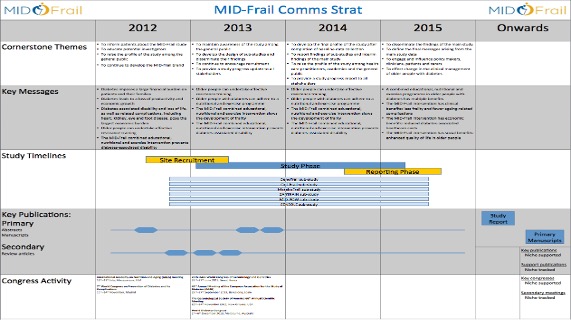
The landscape of diabetes care is shifting. As the global population ages, the clinical focus is moving beyond mere glycaemic control towards preserving functional independence and quality of life. The MID-Frail study (www.midfrail-study.org), a multi-modal intervention trial for frail and pre-frail older adults with type 2 diabetes, represents a landmark effort in this domain [1]. However, while the scientific community rightfully celebrates the ambitious design of this randomised controlled trial (RCT), a more profound achievement lies beneath the surface: the consortium’s strategic approach to publication planning.
Publication planning is defined as a proactive, multi-year strategy to ensure the timely, accurate, and complete dissemination of research findings [2]. It is the architectural blueprint that transforms raw data into a coherent scientific narrative [3]. For the MID-Frail consortium, publication planning is not an afterthought; it is integral to maximizing the €3 billion in potential annual healthcare savings the study estimates for the European Union [1].
The MID-Frail protocol is rigorous. Involving a target of 1,718 subjects across 16 partner sites across seven countries, it utilises a cluster-randomised design to compare usual care against a complex intervention involving resistance training, nutritional education, and strict clinical monitoring [1]. The primary endpoint, a one-point change in the Short Physical Performance Battery (SPPB), is a clinically meaningful measure of functional decline [4].
But why is a dedicated publication plan necessary for such a well-designed trial expected to deliver a single conclusion? Because the journey from data to practice is notoriously inefficient. Studies suggest it takes an average of 17 years for clinical research to be fully integrated into routine bedside care [5]. Without a structured plan, even positive results risk languishing in obscurity if not appropriately disseminated.
A formal publication plan addresses this by mapping out the "who, what, and when." As outlined in the Good Publication Practice (GPP3) guidelines, this includes identifying target journals, pre-defining authorship criteria, scheduling submissions to major conferences (like the European Geriatric Medicine Society), and crucially, planning secondary analyses of sub-populations [2][3]. For the MID-Frail study, this strategic layering is evident in their inclusion of its five sub-studies (Sartrain, MID-POW, MetaboFrail, etc.), each designed to answer complementary physiological questions [1].
Implementing a publication plan delivers a significant scientific ‘return’ on research investment in three specific areas:
As the MID-Frail consortium moves from protocol execution to results, the commitment to publication planning will define their legacy. For researchers designing trials today, the lesson is clear: do not wait for the last patient visit to decide how to tell the story.
Mapping your publication strategy at the same time you map your statistical analysis ensures that the immense investment in studies like MID-Frail translates directly into improved mobility, reduced disability, and better care for our ageing population.
References

Get our latest news and publications
Sign up to our news letterResources
Social


Contact us
Address
Niche Science & Technology
Unit 26 Falstaff House
Bardolph Road
Richmond TW9 2LH
United Kingdom