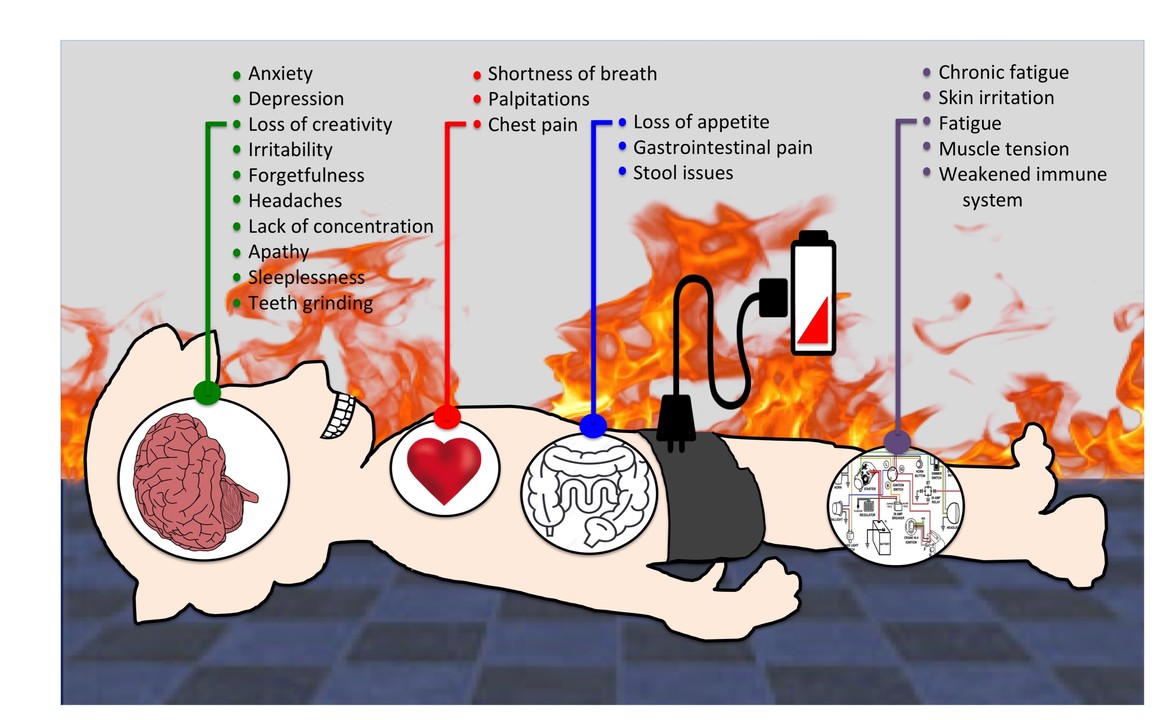
Do you find yourself experiencing an emotional high one minute and then plunge into the deepest lows of dejection the next? Running a business can be emotionally draining. The good news is you are not alone. Even the most experienced business owners find themselves exhausted from constantly carrying the emotional baggage of leadership, drained by responsibilities for the business, the team and the bottom line.
From time-to-time, the day-to-day business of running a company feels like an uphill battle. Escape is not always possible. Technology enables many great things but escape isn't one of them. We often feel guilty if we aren't at least 'active' 24/7, pandering to your global network. Eventually, the constant pressure impacts on your mental flexibility and it starts to feel like your body and soul are working against you.
Don't be mistaken; running your own business is the best. Every day, I thank a host of deities for giving me the opportunity to start Niche, my own company; and for helping me find my purpose. I love what I do. I love working with the brilliant team that I helped create and I love the flexibility the work provides. I also greatly appreciate the freedom that comes with being 'the boss'. However, when you are the boss, 'the buck', as they say, ends with you.
The secret is ensuring that you allow yourself some respite. Chronic stress is associated with elevated levels of cortisol which can interfere with the normal functioning of your body [1]. The effects can be extensive, impacting on your sleep, digestion and immune system. Very quickly you start to experience signs of physical (fatigue, general health, weight gain (or loss)) and emotional (anxiety, insomnia, depression) exhaustion [2][3]. Importantly for a leader, one of the first things you lose is your creativity [4]. Next you will start to experience irritability, followed by a loss of productivity. Everyone's stamina is different but even the strongest among us will start to feel a drop in motivation, output and sense of humour. Life can quickly become a drag.
Be warned, burnout may be on your horizon. Clinical research has shown that job burnout has a permanent impact on your health. One unpleasant statistic, for example, suggests chronic stress may be associated with an almost 80% increase in the risk of heart disease [5]. No one wants to go down this path. And no leader can afford impaired health -- whether you are in an established business, where employees need your support, or in a start-up, where every aspect of the business needs your attention.
I expect that you are ready for some good news...
Research shows that attending to workplace health and wellbeing has considerable benefits for leaders and employees alike, resulting in positive business returns [6]. Win-win! Don't believe me? Look to Silicon Valley and see how business gurus have embraced the benefits of increasing focus on health and life-balance initiatives. With this in mind perhaps I can convince you to invest in a ‘nap pod’ for everyone.
Newbie or veteran, if you want to be the best you have to be equally committed to your health, your needs and your wellbeing as you are to the success of your business. If you would like an analogy, take that of a soldier in a gas attack. The British Army teaches you that at the first sign of an attack you need to fit your own respirator first, before helping others. The argument is that you can't help anyone else if you are suffering yourself.
So, let's get started...
Eat regularly and eat well -- there is a lot to be said for the old adage "garbage in equals garbage out." I don't want to get evangelical about diets so I will simply mention that we all know the difference between healthy and unhealthy foods. Choose wisely. Also, move your body; exercise has endless, well-documented and scientifically proven health benefits [7].
Don't fall into the trap of working 24/7 – this is the super-highway to burnout. The more you work, the less work... works. Trust me! Adopt a proactive approach in your planning. Build flexibility and 'wiggle' room into your diary. This will allow you to 'react' strategically to circumstances as they arise. Manage your diary and your work patterns intelligently. Your body has rhythms, recognise them, know when you are at your best for different tasks [8].
Creativity lives in your downtime. Embrace weekly guilt-free time for relaxation –you are more likely to do your best thinking when you are most relaxed [4][9]. Get a change of scenery, perhaps try a different coffee shop; just allow your mind to freestyle from time to time. Without this you won't be able to create a vision for your business. And without a vision you adopt a reactive stance and then you have no future other than what happens to you.
Build a trusted network around you (before you need it!). Don't be afraid to ask for advice, admit your weakness and embrace vulnerability – it will help you appreciate others and recognise their real value [10]. Talk to other business owners – it'll give you perspective – you will find that we all experience the same challenges.
Every job has aspects that are exhausting, time consuming and/or soul destroying. Obviously, as a leader it is your responsibility to take on your fair share of these tasks. However, you won't be a great boss if you are exhausted. Delegate tasks that weigh you down, it's an investment.
Embrace and cultivate your interests 'outside' work. Don't forget to have fun -– your work will be better for it! Ideas and inspiration appear when you play (win!), problems and challenges take on a different perspective (win! – if it makes all your troubles less insurmountable) [11].
Remember to inject more life into your life, it will help you recognise why you are running the business and why you do what you do. Find your ikigai.
Establish clear short-term goals and mini milestones. Focusing on your 5-year goal will overwhelm you! By setting micro-goals you will get to enjoy the satisfaction of a target achieved and a job well done more frequently [12]. Build in time to reflect on the small wins and how they move you forward. Progress is motivating, so take time to celebrate it.
We all make mistakes – but we don't all have to burn energy in regret. Reject feelings of anger or any need to roar at those involved. Adopt an attitude of wanting to understand how you arrived at the position. If your inner child needs to kick someone it means you need to rationalise the situation and appreciate the pointlessness of retribution (it is the equivalent of kicking yourself). Move on – a great leader goes through this transition in less than a heartbeat. Failure is only failure if you didn't learn something [13]!
In conclusion, I've been a workaholic leader. I've toiled extremely long hours, skipped meals and missed out on family time. Quite often I have been unwilling or unable to relinquish control. As a result, I have often been overly involved with other people's projects.
Learning to trust my team to get the job done without my interference was a big step. A couple of unfortunate accidents helped me learn that lesson the hard way. If you've hired well, you can take the downtime to rediscover your humanity or focus on areas where your attention is actually needed and/or valued. It doesn't matter who you are or how hard you graft, nobody has time for micromanagement.
There is a common proverb that states: when you are up to your neck in alligators, it's hard to remember that your plan had been to drain the swamp. Focus too closely on the business and you will always feel that the alligators are biting at your ears. When that happens, we never feel we have time to prioritise our needs. Wrong!
It can often feel counter-intuitive and somewhat decadent to step away from the daily business grind, however, it is essential... and a strategic move, assuming that such a reframe makes you better adjusted to the challenges ahead. The world will not collapse if you turn it off. So, be kind to yourself, remove the pressures and focus on taking care of your health... and in turn, you will be able to take care of your business. Remember the poem about the indispensable man. Don't get me wrong, this is not something I am magically adept at. This is something I am working on. I fail – regularly.
References
Get our latest news and publications
Sign up to our news letterResources
Social


Contact us
Address
Niche Science & Technology
Unit 26 Falstaff House
Bardolph Road
Richmond TW9 2LH
United Kingdom