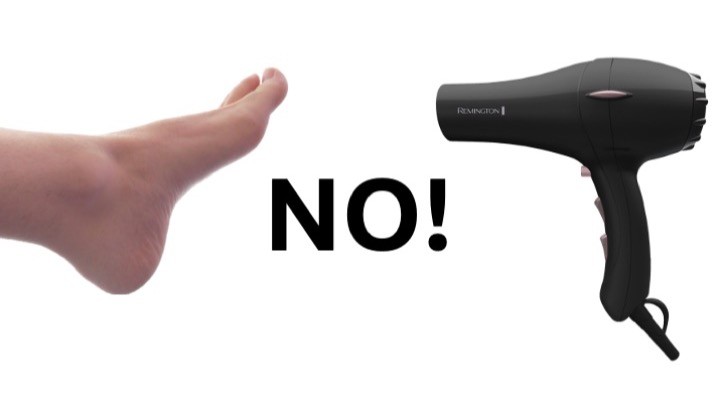
As a kid I went to the gym to build the physical attributes expected of a sprinter. Gyms of the 1970s and 1980s were a little different than they are now. You still get the dour-faced, hardcore bodybuilders using the free weights, but you now find a more eclectic phenotypes using the various cycles, rowing machines, and weight-lifters. Changing rooms also appear to have moved on. Modern blokes appear to spend a lot of time in front of the mirror preening, and the hairdryer is used for more than just drying your hair, and you (like me) should have a problem with this. The pandemic should have taught us better, yet here we are, watching men create microbial clouds in shared spaces with a level of nonchalance usually reserved for checking the weather.
Setting the scene, the issue of pathogen aerosolisation by hand dryers, particularly jet-air models, contaminating bathrooms and making them 'super-spreader' environments has been a concern for some time. Studies show that hand dryers aerosolise water droplets and microbes from hands, dispersing bacteria like Staphylococcus aureus and faecal coliforms (e.g., Escherichia coli) for up to 3 meters [1]. One study found that jet dryers spread 1,300 times more viral particles than paper towels, with pathogens lingering in air for up to 15 minutes [2]. Pathogens can persist for extended periods [3]. In brief, air blowers create reservoirs for surface contamination and inhalation exposure. The problem is well recognised [11].
From Hand Dryers to Hairdryers
Unlike hand dryers, which are generally confined to bathrooms, you commonly find hairdryers in communal changing rooms for gyms, pools, and spas, where they pose a unique and underappreciated public health challenge. The skin, especially in moist areas, has specific microbiomes. The feet, armpits, and perianal regions contain higher concentrations of potentially pathogenic bacteria and fungi, including Staphylococcus aureus, Escherichia coli, and species of Candida [4, 5]. These microbes are widely distributed when blow-dried, making them available for inhalation or contact-based transmission. For example, the warm, moist environment of feet fosters the fungi (Trichophyton spp.) responsible for athlete's foot and viruses (e.g., plantar warts). The perianal area hosts faecal bacteria, including Enterococcus and Clostridioides difficile, which can persist even after washing [6]. Similarly, opportunistic pathogens like Candida yeasts and Streptococcus agalactiae colonise genital skin folds [7].
Hairdryers can also spread desquamated skin cells and organic (faecal) debris. A 2022 study found that hairdryers dispersed Staphylococcus epidermidis (common on feet) at concentrations 50% higher than ambient levels for up to 2 meters [8]. Given the warm and humid environment of a changing room, these microbial clouds can remain viable for prolonged periods, contaminating surfaces and increasing the risk of cross-infection. Inhalation of fungal spores (dermatophytes) can cause respiratory allergies or invasive infections in immunocompromised individuals [9]. Bacterial pathogens like Pseudomonas aeruginosa, often found in moist gym environments, will colonise lungs and wounds [10]. Naked viruses like HPV (plantar warts) survive drying and can infect others when they settle on shared surfaces, such as towels, benches, and lockers, creating fomites. A 2023 study linked gym hairdryer use to elevated adenosine triphosphate levels on nearby surfaces, indicating organic contamination [11]. These findings are supported by research on barbershops, which have also shown high levels of bacterial contamination on hair dryers, including the isolation of methicillin-resistant Staphylococcus aureus (MRSA) [6]. The very act of using a hairdryer for anything other than its intended purpose turns a convenience tool into an aggressive vector for disease.
Germ Theory
The first realisation that germs cause disease emerged gradually, with key breakthroughs occurring in the 19th century. Although early theories like miasma suggested that 'bad air' spread illness, scientific evidence for germ theory began with the work of Ignaz Semmelweis in the 1840s, who demonstrated that handwashing reduced maternal deaths in hospitals [12]. Louis Pasteur later provided definitive proof by showing how microorganisms were responsible for fermentation and spoilage, leading to his development of pasteurisation [13].
Germ theory was cemented into popular culture by Robert Koch in the 1870s and 1880s with the identification of the bacteria responsible for tuberculosis and anthrax [14]. The understanding laid the foundation for modern microbiology, infection control, and vaccination.
If the 1918 Spanish flu pandemic did not lock cause and effect into the popular psyche [15], the recent COVID-19 pandemic should have highlighted the lethality of airborne and surface transmission. Studies revealed that SARS-CoV-2, much like influenza and tuberculosis, spreads effectively through aerosols [16]. The extensive focus on air purification, mask-wearing, and ventilation highlighted how easily respiratory droplets could facilitate the spread of disease. Despite these lessons, behaviours that promote aerosolisation of biological materials in changing rooms persist, reflecting a broader issue of public ignorance and plain bad manners.
Many individuals disregard bioaerosol risks in shared spaces. Hairdryer misuse exemplifies the ‘hygiene theatre’ paradox: performative cleanliness (drying yourself thoroughly) that inadvertently compromises safety [17]. In my own humble opinion, this type of behaviour is more than sufficient evidence that as a species, the human race is far too stupid to survive. Surely, we will meet the same fate as the Golgafrinchans, wiped out by a virulent disease contracted from a sweaty toe (rather than an uncleaned telephone cf Hitchhiker's Guide to the Galaxy). We have the knowledge, but we appear to lack the collective will to apply it.
The Psychology of Risk Denial
The innovative use of hairdryers in changing rooms suggests a disregard for communal health, paralleling issues observed with vaccine hesitancy and resistance to mask mandates during the pandemic [18]. This behaviour is often rooted in a combination of ignorance and selfishness, wherein individuals prioritise personal comfort over collective well-being. Those working on behavioural studies have called this 'moral disengagement' [19]. Users rationalise hairdryer misuse by failing to appreciate risks or overestimating their own hygiene ("I'm clean"). This contemptuous attitude mirrors pandemic-era resistance to masks and vaccines, where individual freedom was virtually weaponised against public health. It is a failure to grasp that our actions in a shared environment have consequences for everyone, from the person on the next treadmill to the immunocompromised individual who just wants to get fit.
Conclusion
The misuse of hairdryers in changing rooms is a microcosm of larger societal failures: privileging convenience over communal health, reflecting a broader societal failure to internalise collective responsibility post-pandemic [20]. Putting it colloquially, it is just plain rude. The hint is in the name, they are not pit puffers, toe-ticklers, ball blowers, or arsehole aerators. And just do not dry your shorts with the hairdryer. No single person on the face of the planet wants to breathe in your detritus, dried or otherwise. We need to move beyond this individualistic, selfish behaviour and recognise that our health is interconnected.
And that brings me to one last consideration, the planet. People air-drying their unmentionables often do it while wearing towels, the very instrument invented for drying your body. Hairdryers consume 1.5–2.5 kWh per use, contributing to CO₂ emissions. The towels these people are already using have a significantly lower carbon footprint [21]. Choosing energy-intensive drying for minor personal comfort contradicts climate action imperatives. And the consequences of global warming will make COVID-19 look like a walk in the park. Ironically, rising temperatures create more favourable conditions for microbial growth, increasing the likelihood of infections in humid, poorly ventilated environments [22]. I do not know what goes on in the girls' changing rooms but it is time for the boys to step up.
References
Get our latest news and publications
Sign up to our news letterResources
Social


Contact us
Address
Niche Science & Technology
Unit 26 Falstaff House
Bardolph Road
Richmond TW9 2LH
United Kingdom