According to Gene Kranz in his book Failure Is Not an Option, when reporters asked the astronaut Alan Shepard what he thought about as he sat atop the Redstone rocket in May 1961 waiting for lift-off, he had replied, “The fact that every part of this ship was built by the lowest bidder.” It may be an old story told but the message endures. It relates to how easy it can be for us to overlook the relationship between price and value: and when things go wrong, the true cost that this oversight can exact. Nowhere in the pharmaceutical industry is the relationship between cost, price and value better demonstrated than in the delivery of the clinical study report (CSR). Regulatory authorities explicitly regard the CSR as the definitive integrated record of trial design, conduct, analysis and interpretation [1]. Delivery of the CSR is often viewed simply as dotting i’s and crossing t’s at the end of the clinical trial process. And yet, once the study participants have been thanked, the samples analysed and the many study documents archived, the CSR is the one single aspect of the study that remains visible for the lifetime of the product [1,2]. Will it reflect the care you put into conducting the study? Will it clearly represent the study’s findings and communicate the true value of your IMP? Considering these challenges, you need to consider carefully who should write your study report.
If you write the CSR yourself (assuming you have the know-how and time), you will avoid the cost of finding, employing and instructing a third party; however, the minimum price you pay will be loss of your valuable time. If that is the case then please follow the instructions provided in our free insider's guide on writing CSRs [3]. Your other responsibilities – such as programme management and planning your next study, site negotiations and addressing IMP issues – may affect your focus, preventing you from concentrating. And are you aware of the most recent regulatory requirements – for example, do you know enough about Policy 0070 ICH E3 structure and Good Clinical Practice (GCP) documentation standards (which require consistency, traceability and completeness of reporting) [1,4]?
The larger Contract Research Organisations (CROs) will promise you trouble-free CSR delivery. Established CROs have standard operating procedures that ensure proper writing of the report [4]. However, many CROs view the CSR simply as part of a ‘grouped’ service that includes data management and statistics. It is often difficult to know where your CSR that is vital to you stands within the CRO’s priorities. How will your needs compare to the requirements of Big Pharma with multimillion-dollar budgets and requirements? The potential also remains for a generalist CRO to provide a poor service. Regulatory inspections frequently identify deficiencies in documentation quality, traceability of analyses and inconsistencies between protocols, statistical analysis plans and CSRs, underscoring the operational risk of inadequate resourcing [2,4].
Alternatively, you could employ a freelancer. They are much cheaper but there are issues:
- Not redundancy or backup if they have personal issues
- No internal quality management system – SOPs, process documents or templates
- No internal second person review systems
- No internal competency and capabilities system
It is important to note that robust CSR processes should include independent quality control, version control, documented source verification against tables/figures/listings, and maintenance of audit trails—practices explicitly aligned with ICH E3 and ICH E6 expectations for essential documents and data integrity [1,4,5]. We are often asked to ‘rescue’ CSRs. In one case our writer found more errors than we felt appropriate. One page alone had over 100 grammatical and typographical errors. The edits took 12 minutes to identify and 18 minutes to correct in Microsoft Word. Imagine the amount of time needed to address all the points in a 120-page CSR. Providing our feedback on that one page certainly prompted our client them to look closer at their approach to CSRs. Beyond grammar, regulators emphasise that transcription accuracy, internal consistency of data and concordance with source tables, figures and listings are critical quality attributes [1,5].
So, what’s the cost of poor choices when selecting your CSR writing provider? To Big Pharma, any delay on the road to market impacts the final remuneration package. Estimates suggest that for a drug destined to make half a billion dollars in annual sales, a 1-day delay costs about $1.3 million – every day. Any avoidable missed milestone on the path to market, such as a delay in CSR delivery, is therefore unacceptable to anyone accountable for running a profitable business. Time-to-market considerations are well recognised in pharmaceutical economics and are closely linked to patent life and exclusivity periods [6].
To CROs, a poorly written CSR suggests a slap-dash approach to study conduct – and this will impact the trust held in the CRO by anyone who sees the report. If you are a small biotech, a poorly written report can be taken to reflect on the quality of your science. Furthermore, slow reporting often delays the start of the next study – this could well have a crippling impact on a crucial payment milestone or investment decision.
Cycling back down the fiscal hierarchy, the expense of correcting a poorly delivered CSR can almost equal that of writing the original document in the first place. It would be impossible to estimate the value of the time that would have been saved getting it right the first time. Quality management principles within GCP explicitly emphasise prevention over correction and the implementation of documented review and QC procedures [4,5].
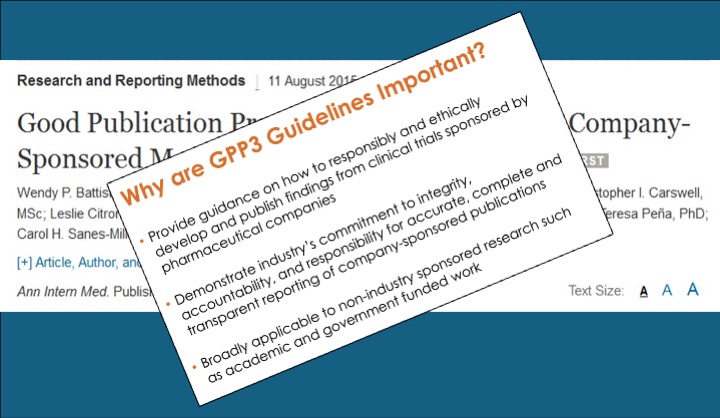
This brings us to one final point: English remains the lingua franca of the pharmaceutical industry. Poorly constructed arguments may devalue the final deal you can negotiate when selling out to Big Pharma. Ultimately, the cost of leaving responsibility for the CSR to teams not experienced in CSR development is delayed delivery, steep and interrupted learning curves for untrained staff and poor-quality documents that struggle to inform or impress the reader. The consequences could be worse still if you miss some essential step introduced in recent changes to regulations. In addition, public disclosure initiatives and journal publication standards increasingly expect alignment between CSRs, trial registries and manuscripts, making precision and clarity even more important [7].
References
- International Conference on Harmonisation. ICH Harmonised Tripartite Guideline E3: Structure and Content of Clinical Study Reports. Geneva: ICH; 1995.
- European Medicines Agency. Reflection paper on expectations for electronic source data and data transcribed to electronic data collection tools in clinical trials. London: EMA; 2010.
- Niche Science & Technology (2016). An Insider’s Insight into Clinical Study Reports.
- International Conference on Harmonisation. ICH Harmonised Tripartite Guideline E6(R1): Good Clinical Practice. Geneva: ICH; 1996.
- US Food and Drug Administration. Guidance for Industry: Submission of Clinical Study Reports. Silver Spring (MD): FDA; 1998.
- DiMasi JA, Hansen RW, Grabowski HG. The price of innovation: new estimates of drug development costs. J Health Econ. 2003;22(2):151-185.
- Chan AW, Song F, Vickers A, Jefferson T, Dickersin K, Gøtzsche PC, et al. Increasing value and reducing waste: addressing inaccessible research. Lancet. 2014;383(9913):257-266.