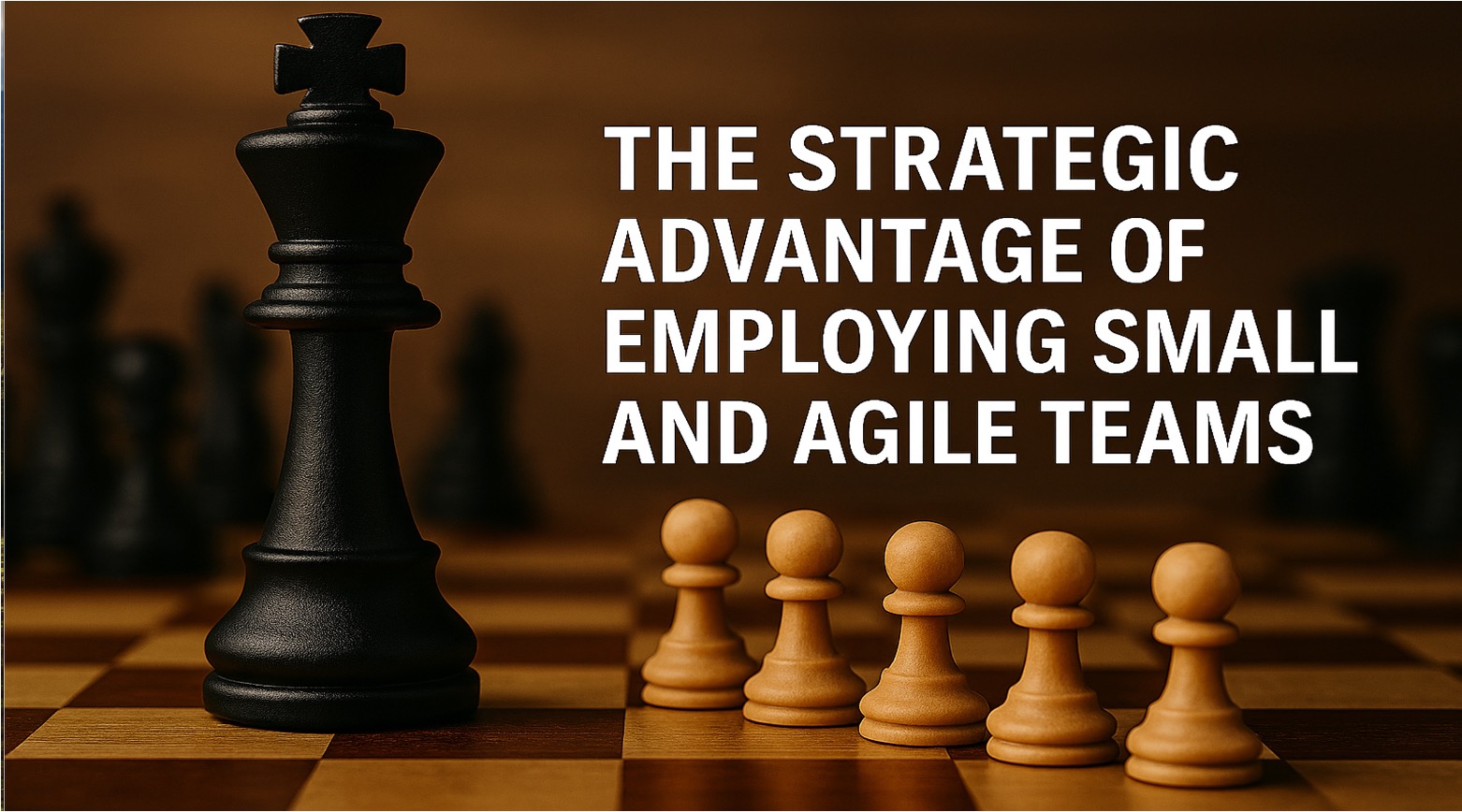
The development of new therapeutics and medical technologies has never been more complex. In the current environment, outsourcing is not merely a cost-management strategy; it is a structural necessity.
It feels like the development of new therapeutics and medical technologies has never been more complex. Biotechnology, pharmaceutical and medical device start-ups operate in a landscape shaped by intensifying regulatory scrutiny, increasingly sophisticated trial designs, expanding data expectations, and investor-driven milestone pressure [1][2][3]. At the same time, venture capital is scarce and most early-stage companies run lean internal teams designed to focus on core scientific innovation rather than operational execution. In this environment, outsourcing is not merely a cost-management strategy; it is a structural necessity [4][5].
While large global Contract Research Organisations (CROs) dominate late-phase multinational trials, a growing number of emerging companies are discovering something other have known for over two decades… the strategic advantages of working with small, agile CROs. In particular, closely knit CRO teams like those at Niche, composed of broadly skilled professionals who work not only for their clients but for each other [6][7].
Small CROs typically operate with flat organisational structures and short lines of communication. Decision-making authority sits close to the operational front line. Sponsors speak directly with senior scientists, regulatory strategists, or clinical leads rather than navigating layers of account management and corporate oversight. This structural simplicity translates into speed [6][8].
Agility in smaller CROs is not merely a function of size. It is often a function of cohesion. Closely knit teams, accustomed to working collaboratively across disciplines, can respond to protocol amendments, regulatory questions, or unforeseen operational challenges without the friction that accompanies siloed structures [7][10]. When medical writers, clinical operations leads and regulatory specialists are used to working together regularly, and trust one another’s judgment, turnaround times shorten and communication errors decrease [10].
For early-stage companies navigating first-in-human trials or early feasibility device studies, where timelines can shift rapidly, this responsiveness can materially affect development trajectories [11].
Start-ups are frequently built around scientific founders and a small executive team but they need to establish the organisational infrastructure to achieve ambitions targets. Hiring full-time experts across regulatory affairs, pharmacovigilance, biostatistics, data management, quality systems, and device compliance is rarely feasible in the early stages. A small CRO with a multidisciplinary team effectively becomes an extension of the internal organisation [4][12].
The advantage lies not only in access to expertise but in its integration with the home team. In closely knit CRO teams, professionals understand each other’s roles and constraints. A regulatory strategy is developed with an appreciation for clinical feasibility; a statistical plan reflects operational realities; safety monitoring aligns with reporting obligations. Because team members work closely and consistently together, they develop shared mental models and institutional memory on how to get things done [9][13].
This integrated approach reduces the risk of fragmented outsourcing, where disconnected vendors operate in parallel without alignment. For a biotech running its first clinical programme, that coherence can prevent costly rework and regulatory missteps [5][14].
Small CROs, by virtue of serving multiple sponsors across indications and development stages, accumulate a wide knowledge base. They observe regulatory feedback patterns, operational bottlenecks, and common design flaws across programmes. This cross-sponsor experience becomes an imported asset for the start-up client [6][15].
Importantly, in tightly bonded teams, this knowledge circulates internally rather than remaining compartmentalised. Lessons learned in an oncology submission may inform a rare disease programme; device regulatory insights may strengthen combination product planning. Because the team works collaboratively rather than competitively for internal recognition, information-sharing becomes cultural rather than transactional [7][9].
For a young biotech with limited prior regulatory interaction, access to this collective intelligence serves to accelerate learning curves that might otherwise take years to develop internally [12].
Time is frequently the scarcest resource. Funding milestones and deadlines, while competitive positioning creates pressure to initiate programmes rapidly. Smaller CROs typically demonstrate shorter onboarding and contracting cycles. Master service agreements are less encumbered by corporate legal layers; budget negotiations do not require multi-tiered sign-off processes [6][16].
Beyond administrative speed, closely knit CRO teams often mobilise faster because internal coordination is streamlined. Resource allocation can be discussed informally and resolved quickly. Senior leaders remain directly involved, enabling immediate prioritisation [7].
For companies operating under tight financial runway constraints, weeks saved at the contracting stage can represent meaningful strategic advantage [4].
Large CROs carry substantial corporate infrastructure, global offices, shareholder expectations, formalised pricing structures. These costs are inevitably reflected in sponsor budgets. Smaller CROs typically operate with lower fixed overhead and greater pricing flexibility [6][17].
More importantly, they are not governed by rigid internal revenue hierarchies that prioritise large pharmaceutical contracts over smaller biotech engagements. In many small CROs, each client represents a significant proportion of the portfolio. Consequently, every sponsor receives attention and consideration commensurate with strategic importance rather than budget magnitude and potential for future contracts [7].
This does not merely affect pricing; it influences behaviour. When a team views a client as a priority rather than an account tier, responsiveness and attentiveness follow naturally [9].
The most enduring advantage of a small CRO may be relational rather than structural. Low team turnover is common in cohesive organisations where professionals feel valued and connected to shared purpose. Sponsors benefit from continuity of personnel, the same project manager, regulatory lead, or writer remaining engaged throughout a programme’s lifecycle [18].
Such stability fosters trust and understanding. Discussions about risk, delays, or budget pressures can occur transparently without defensive posturing. Problems are addressed collaboratively rather than escalated hierarchically [19].
In closely knit teams, internal trust translates outward. When colleagues work well together and support one another, sponsors experience consistency rather than conflicting messages. Bi-directional satisfaction emerges when both sponsor and CRO perceive the relationship as mutually invested in success. Goals align not simply contractually but culturally [20].
Large-scale outsourcing can sometimes devolve into vendor management. Smaller CROs are often positioned differently. They are invited into strategic discussions, involved early in protocol design, and consulted on regulatory positioning. They effectively become part of the team and their proximity to sponsors enables meaningful contribution rather than task execution alone [6][7].
Because their teams are accustomed to working interdependently, they often approach sponsors with the same mindset: partnership rather than service provision. Shared accountability replaces transactional delivery; everyone goes the extra mile [9].
Small, agile CROs are particularly well suited to early clinical programmes, rare disease studies, early feasibility device investigations, and transitional stages between preclinical and clinical development [11][12]. In these contexts, flexibility and close collaboration outweigh the need for global site networks or expansive infrastructure. Also, in our post-COVID, 365/7 online world, sponsors are not limited only to local providers, they can select the best fit organisation based on best fit and experience described in your case histories.
This is not to suggest that large CROs lack value; multinational Phase III trials or global market access programmes demand their scale. Yet for many emerging companies, the development/funding inflection points occur before Phase III, and at those junctures, closely knit CRO teams often provide the right balance of expertise, agility and relational depth [6][7].
As life sciences innovation accelerates, development models are evolving. Many of the larger CROs are attempting to enter the biotech space with special business functionalities, attempting to ape our own BioStack™ approach built on our 25+ years of experience. For biotechnology, pharmaceutical and medical device start-ups, partnering with a small, agile CRO composed of a cohesive and broadly skilled team can function as a force multiplier [6][7][12].
Sponsors become comfortable in only contracting the service they need in real-time and pay for what they use. Reduced bureaucracy, competitive pricing, rapid mobilisation and deep relational trust converge to create not merely operational efficiency but strategic resilience – BioStack™.
In a field where uncertainty is inevitable, working with an experienced team that works for each other, and therefore works effectively for you, may be one of the most under-recognised advantages available to emerging life science companies.
References

Get our latest news and publications
Sign up to our news letterResources
Social


Contact us
Address
Niche Science & Technology
Unit 26 Falstaff House
Bardolph Road
Richmond TW9 2LH
United Kingdom