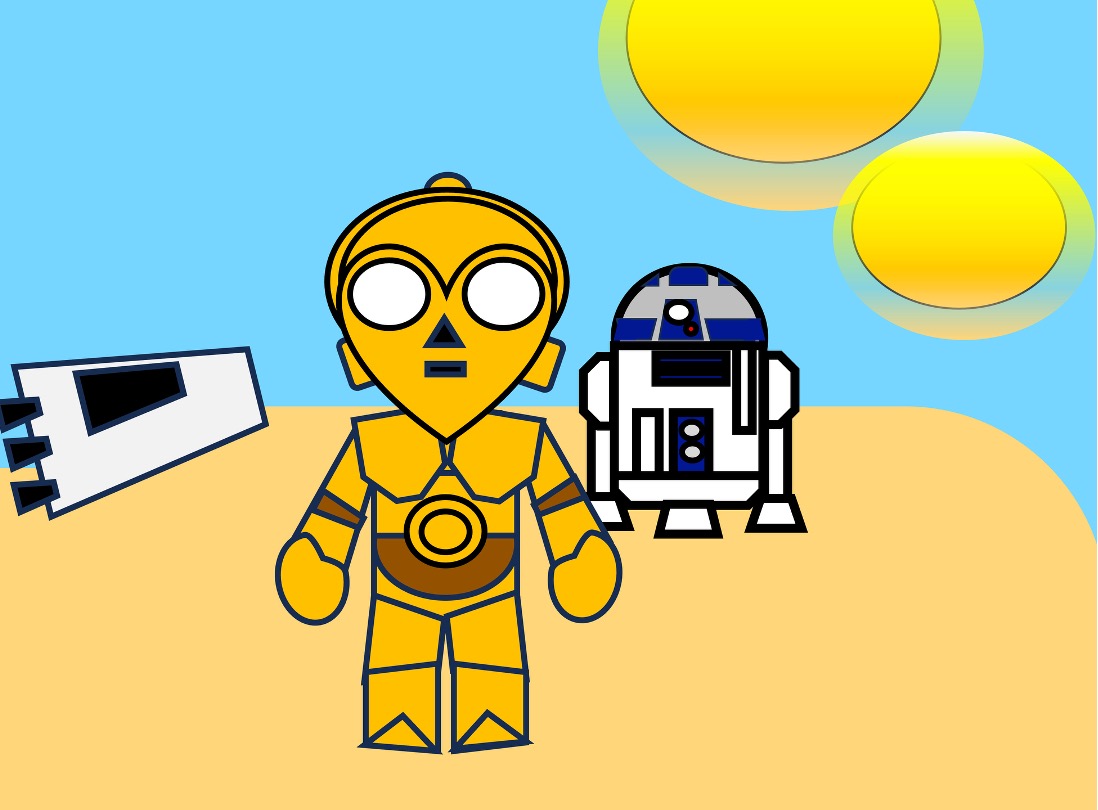
What is May the fourth? It’s the pun that’s travelled the galaxy. Each year on May 4th, the play on words, “May the Fourth be with you,” resonates across the globe. What began as a phonetic coincidence with the iconic phrase “May the Force be with you” has become Star Wars Day, an unofficial yet widely recognised cultural event. Its earliest recorded use dates back to 1979, when the phrase appeared in a congratulatory message to Margaret Thatcher the day after she won the UK election. This marked its entry into public discourse [1].
At first glance, this phenomenon appears trivial: a joke sustained by fandom. Yet its persistence and expansion suggest something deeper. The puns enduring appeal reflects not only linguistic creativity but also its ability to act as a cultural conduit, subtly directing public attention toward science, technology, and the imaginative possibilities they represent. And right now, we could all do with a little positivity.
The transformation of a simple pun into a global event illustrates how language can catalyse collective behaviour. What began as a witty remark has evolved into an annual celebration involving media platforms, educational institutions, and public organisations. By the early 2010s, organised events, from film screenings to fan conventions, had formalised the day, reinforcing its place in popular culture [1].
The broader cultural context is crucial. Since its release in 1977, Star Wars has become one of the most influential science fiction franchises, permeating its culture global through film, literature, and merchandising [2]. Its narratives, characters, and visual language have created a shared imaginative framework that transcends generations. Such cultural saturation enables a simple pun to function as a trigger for widespread engagement.
Importantly, our engagement is not purely nostalgic. It is participatory. Social media amplifies the reach of the phrase, transforming it into a synchronised global event where millions actively contribute, through humour, parody, and creative reinterpretation. In doing so, the pun becomes a form of social glue, binding individuals through shared recognition and amusement. Those involved in the communication of science messages would never miss such a great opportunity; and I have participated myself [3][4][5][6].
Humour plays a central role in this phenomenon. Scientific research has consistently demonstrated that humour enhances attention, improves retention, and fosters positive attitudes toward complex material [7][8]. By introducing incongruity, a mismatch between expectation and reality, humour stimulates our engagement, encouraging us to resolve the discrepancy. This process mirrors, in a simplified form, the curiosity-driven reasoning central to scientific inquiry.
The phrase exemplifies this mechanism. Its effectiveness lies in its dual interpretation: a somewhat cheesy and familiar phrase reconfigured into a playful linguistic twist. This captures your attention and invites participation, lowering the cognitive barrier to engagement.
Historically, humour has long been embedded in science communication. Victorian popularisers of science frequently used wit and analogy to make emerging discoveries accessible to broader audiences [9]. What distinguishes contemporary phenomena like Star Wars Day is the scale at which humour operates, amplified by digital networks and global media.
Central to the success of Star Wars Day is the franchise’s intrinsic relationship with science. Although Star Wars is often characterised as ‘space fantasy,’ it is deeply rooted in scientific motifs: space exploration, artificial intelligence, robotics, and energy systems. These elements provide a scaffold upon which scientific curiosity can be built.
As highlighted in my earlier commentaries, the films derive much of their appeal from their integration of science and technology, even when the underlying science is speculative or implausible [6]. Concepts such as lightsabres and faster-than-light travel, while not feasible within current scientific understanding, stimulate inquiry into real physical principles. Discussions of plasma physics, energy requirements, and relativity often emerge precisely because the fictional constructs invite scrutiny.
I further emphasise that this engagement is closely tied to the psychological experience of awe, the sense of wonder elicited by vastness, complexity, or the unknown [5][6]. Awe has been increasingly recognised in the Sci-Fi genre as a powerful motivator for curiosity and learning. Science fiction, by presenting grand and imaginative scenarios, acts as a catalyst for this emotional response [10].
Star Wars Day occupies a unique position within the landscape of informal science learning. Unlike structured educational settings, informal contexts rely on voluntary participation and intrinsic motivation. Events associated with May 4th, ranging from museum exhibits to classroom activities, often leverage the cultural familiarity of Star Wars to introduce scientific concepts.
Educational initiatives frequently draw parallels between fictional technologies and real-world science. For example, discussions of droids such as R2-D2 and C-3PO naturally lead to explorations of robotics and artificial intelligence, fields that have advanced significantly since the original films were released [11]. Research in robotics and AI has explicitly recognised that cultural engagement with science-fiction droids such as R2-D2 and C-3PO fosters fascination and inquiry, with their popularity “speaking to” and helping motivate real-world exploration in artificial intelligence and robotic systems [12]. What once seemed fantastical now appears increasingly plausible, illustrating the dynamic interplay between imagination and innovation.
My own earlier reflections reinforce this perspective, noting that scientific understanding does not diminish wonder but can deepen it, transforming passive amazement into active curiosity [5][6]. This transition, from awe to inquiry, is a cornerstone of effective science communication.
The widespread adoption of Star Wars Day also highlights the role of humour in collective behaviour. Charities, organisations, and institutions routinely adapt the “May the Fourth” pun to their own messaging, using it as a vehicle for outreach and engagement [13]. These adaptations often incorporate scientific or educational themes, further extending the reach of the original joke.
Humour, in this context, functions as both an entry point and a unifying force. It creates a shared cultural moment that encourages participation across diverse audiences. Importantly, it does so without requiring prior expertise. The accessibility of humour ensures that engagement is inclusive, drawing in individuals who might otherwise feel excluded from scientific discourse.
However, this approach is not without limitations. The risk of oversimplification or trivialisation remains, particularly when complex scientific concepts are reduced to analogies or metaphors. In addition, the commercialisation of Star Wars Day may shift the focus from education to consumption. Yet these challenges do not negate the broader value of the phenomenon; rather, they highlight the need for thoughtful integration of humour and accuracy.
Previous articles offer a particularly insightful lens through which to view Star Wars Day. I hope that a consistent theme emerges across these commentaries: the interplay between imagination and scientific understanding.
In Feeling the Fourth on Star Wars Day, the discussion centres on the tension between scientific accuracy and imaginative freedom, concluding that the value of science fiction lies not in its realism but in its capacity to inspire wonder [6]. Earlier pieces similarly frame Star Wars as a form of modern mythology, one that engages audiences emotionally while subtly introducing scientific ideas.
This perspective aligns with broader academic discussions of science communication, which emphasise the importance of narrative and emotional engagement:
Facts alone are rarely sufficient to capture attention; it is through stories, metaphors, and, indeed, humour that science becomes meaningful to wider audiences. Any school kid will confirm this.
In conclusion, “May the Fourth be with you” may be one of the simplest puns in modern culture, yet its impact is far from trivial. It demonstrates how humour, when embedded within a rich cultural framework, can act as a powerful mechanism for engagement. By drawing people into a shared moment of amusement, it opens a pathway, however indirect, to scientific curiosity.
The broader lesson is clear. Science does not need to be austere or inaccessible to be taken seriously. On the contrary, accessibility is central to its public life. Humour and puns, often dismissed as superficial, can serve as effective tools for lowering barriers, inviting participation, and fostering curiosity.
If the goal is to make science accessible to all, then the strategy must extend beyond formal education and technical discourse. It must embrace the cultural forms through which people naturally engage with the world. Star Wars Dayexemplifies this approach: a playful linguistic twist that, year after year, brings science into public consciousness.
In the end, making science accessible is not merely about simplifying ideas; it is about creating connections. And sometimes, those connections begin not with equations or experiments, but with a smile, and a well-timed pun.
References

Get our latest news and publications
Sign up to our news letterResources
Social


Contact us
Address
Niche Science & Technology
Unit 26 Falstaff House
Bardolph Road
Richmond TW9 2LH
United Kingdom