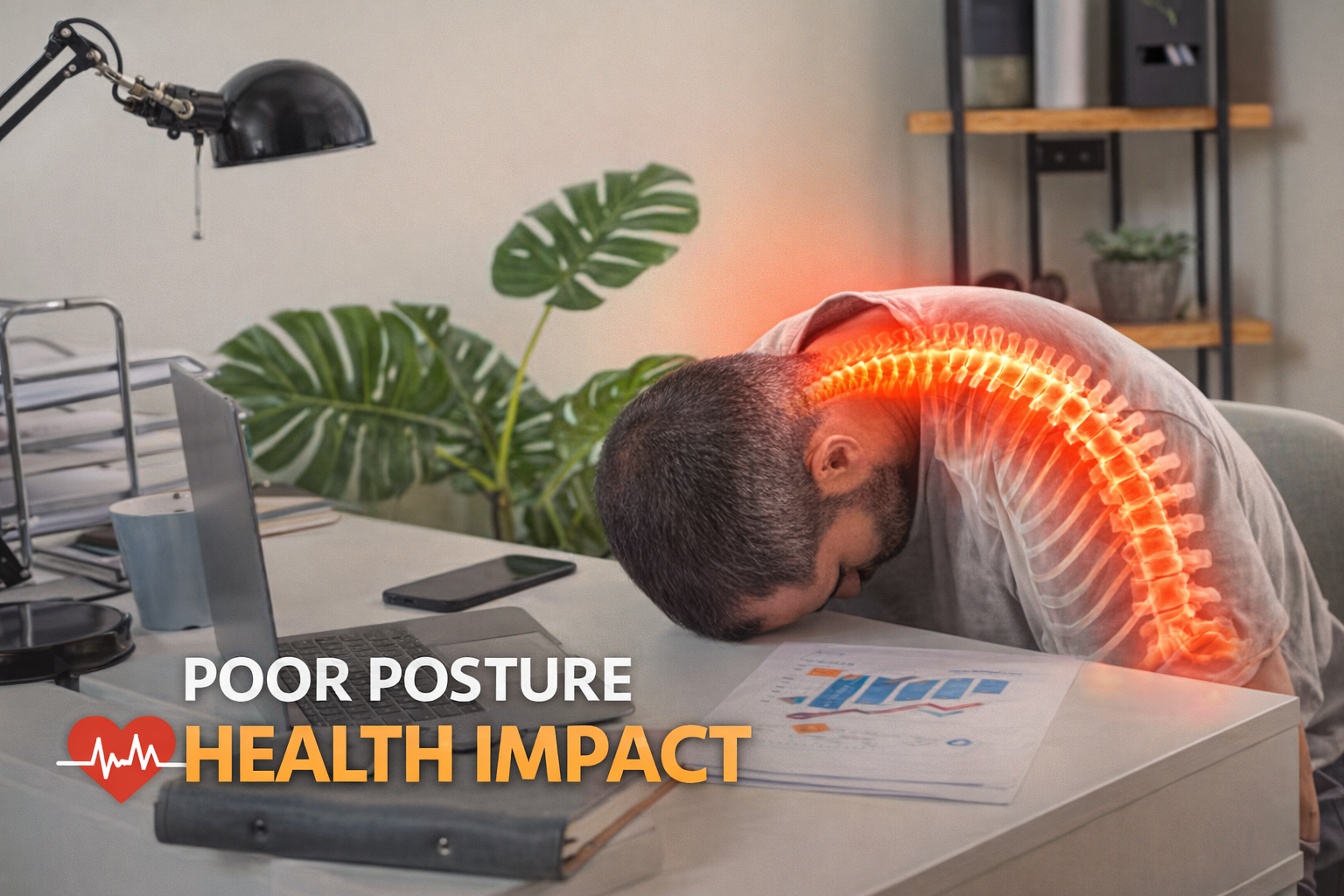
What are the hidden health costs of prolonged sitting associated with the homeworking profile of many medical writers since COVID?
The COVID-19 pandemic forced a rapid and unplanned transition to homeworking across many knowledge-based professions [1]. Within the medical communications community, this shift was largely successful in maintaining productivity and morale. However, findings from our 2020 survey, published in March 2021, highlight a more nuanced picture, one in which prolonged sitting, reduced physical activity, and blurred work–life boundaries may carry significant consequences for both physical and mental health [2]. For medical writers in particular, whose roles are inherently desk-based, these behavioural shifts warrant closer scrutiny.
Medical writing has always been a cognitively demanding but physically sedentary profession. The transition to homeworking appears to have amplified this sedentary tendency. Survey respondents reported increased desk-based behaviours, including more frequent eating at their workstations and concerns about reduced exercise [2]. These findings align with a growing body of literature identifying sedentary behaviour as an independent risk factor for adverse health outcomes, even among individuals who meet recommended physical activity levels [3].
Prolonged sitting has been associated with increased risk of cardiovascular disease, type 2 diabetes, and all-cause mortality [4]. Mechanistically, long periods at your desk reduces skeletal muscle activity, impairing glucose metabolism and lipid regulation [5]. For medical writers working long, uninterrupted hours at a desk, these physiological effects are likely to accumulate insidiously over time.
Importantly, the homeworking environment can also exacerbate these risks. Without the incidental movement associated with commuting, walking between meetings, or even leaving the office for lunch, daily energy expenditure is significantly reduced. Our survey suggests that while some individuals maintained or improved their exercise habits following the onset of COVID, a substantial proportion experienced the opposite [2].
Beyond metabolic health, prolonged sitting is strongly associated with musculoskeletal disorders, particularly of the lower back, neck, and shoulders [6]. The rapid transition to homeworking meant that many medical writers were working in suboptimal ergonomic conditions, often without appropriate chairs, desks, or monitor setups.
Free-text responses from our survey highlighted reports of back pain and discomfort linked to inadequate home office arrangements [2]. This is consistent with evidence suggesting that poor workstation ergonomics can significantly increase the risk of musculoskeletal symptoms [7].
For medical writers, whose productivity depends on sustained concentration and comfort, such physical strain can have direct consequences for work quality and efficiency. It is fair to assume that pain and discomfort impair cognitive performance and increase fatigue, creating a feedback loop that further reduces movement and exacerbates sedentary behaviour.
Our survey also revealed that a subset of respondents experienced reduced vigour, poorer rest, and difficulties with concentration [2]. While these outcomes are multifactorial, prolonged sitting and reduced physical activity are likely contributors.
Emerging evidence suggests that physical movement plays a critical role in maintaining cognitive function. Acute bouts of activity have been shown to improve attention, executive function, and mood [8]. Conversely, extended sitting is associated with increased mental fatigue and reduced cognitive performance [9].
For medical writers, whose work demands sustained attention to detail, critical appraisal of data, and complex synthesis of information, even subtle declines in cognitive function can have meaningful impacts. Errors, reduced clarity of thought, and slower output may all arise from suboptimal behavioural routines.
Perhaps the most striking finding from our survey was that approximately 28% of respondents reported feelings of loneliness or isolation [2]. While this is partly attributable to broader societal restrictions during lockdown, the role of sedentary, screen-based work should not be overlooked.
Sedentary lifestyles have been linked to increased risk of depression and anxiety, independent of other factors [10]. The combination of prolonged sitting, reduced social interaction, and blurred work–life boundaries creates a psychosocial environment conducive to poor mental health. Indeed, respondents also reported difficulties “switching off” and a tendency to work longer hours [2]. Not good for anyone.
Routine disruption appears to be a key mediating factor. In traditional office settings, daily structure is externally imposed. At home, medical writers must self-regulate their schedules, breaks, and boundaries. Without deliberate routines, work can become continuous and unbounded, further reinforcing sedentary behaviour and psychological strain.
Taken together, these findings underscore the need for medical writers to adopt more intentional and health-conscious working routines. While organisational support is important, individual behaviour plays a critical role in mitigating the risks associated with sitting at your desk for long hours. What’s to be done:
First, regular movement breaks should be prioritised. Evidence suggests that getting up from your desk every 30–60 minutes with brief periods of standing or walking can improve metabolic and musculoskeletal outcomes [11]. Simple strategies, such as standing during calls, using timers, or incorporating short walks, can be highly effective.
Second, ergonomic optimisation of the home workspace is essential. Adjustable chairs, appropriate monitor height, and external keyboards can significantly reduce physical strain. Employers may have a role in facilitating access to such equipment, but self-awareness and responsibility for self are also important. You can certainly work to get your monitor the right height, etc.
Third, structured daily routines should be established. Our survey indicated that many respondents benefited from creating a consistent work pattern [2]. Scheduling dedicated breaks, setting clear start and end times, and avoiding desk-based eating can help restore boundaries and reduce time at the desk.
Fourth, integration of physical activity into the working day is crucial. This need not involve intensive exercise; even light activity, such as stretching or walking, can confer cognitive and psychological benefits [8]. For medical writers, incorporating movement between writing tasks may also enhance creativity and problem-solving.
Finally, attention to mental well-being is paramount. Maintaining social connections, whether through virtual meetings or informal check-ins, can mitigate feelings of isolation. Equally, recognising the signs of fatigue and disengagement, and responding with rest or activity rather than slumped over your computer, is critical.
As the medical communications industry moves towards hybrid models of working, the lessons from this period should not be overlooked. Homeworking offers clear benefits in terms of flexibility and productivity, but it also introduces new health risks that must be actively managed.
For medical writers, the challenge is not simply to adapt to a new environment, but to redefine what constitutes effective and sustainable working practice. Productivity should not be measured solely in output, but in the ability to maintain cognitive performance, physical health, and psychological resilience over time.
The evidence is clear: prolonged desk work is not a benign by-product of knowledge work, but a modifiable risk factor with significant implications. By adopting better routines, grounded in movement, structure, and self-awareness, medical writers can protect both their health and their professional effectiveness in an increasingly sedentary world.
References
Get our latest news and publications
Sign up to our news letterResources
Social


Contact us
Address
Niche Science & Technology
Unit 26 Falstaff House
Bardolph Road
Richmond TW9 2LH
United Kingdom