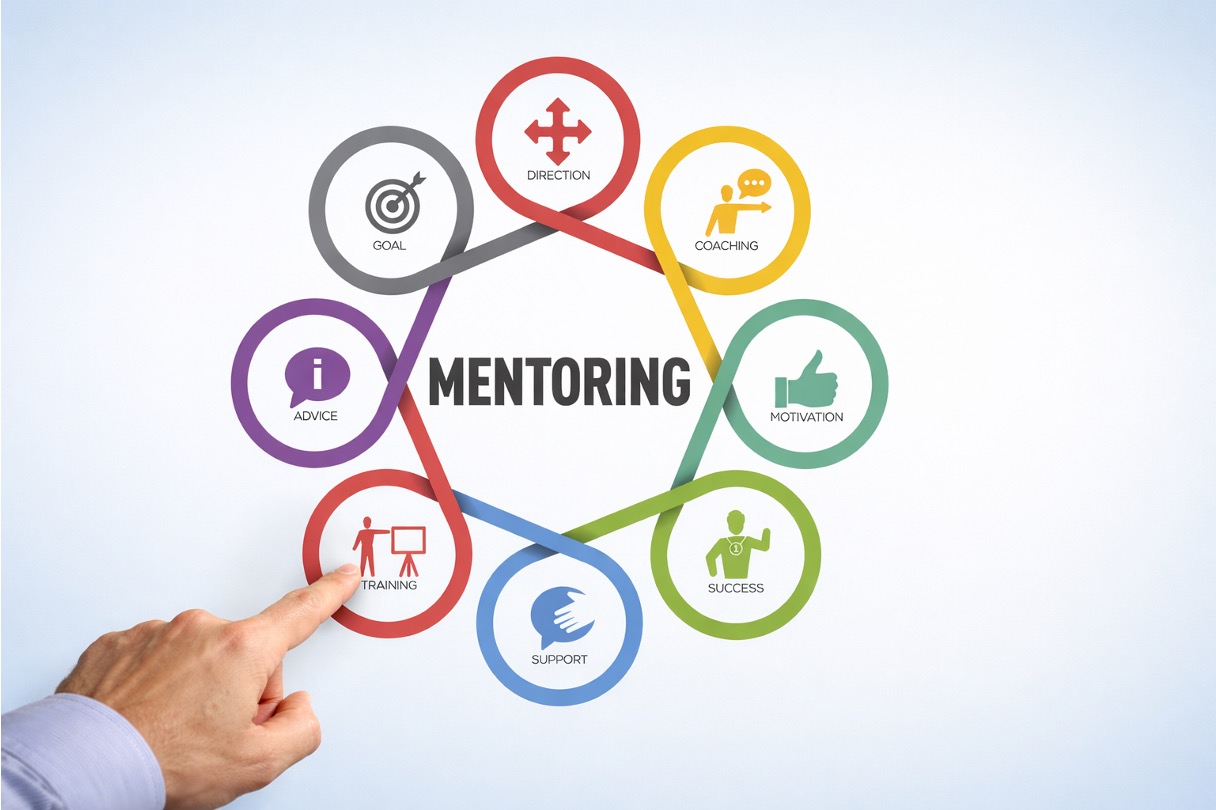
In my 2016 article on mentoring, I reflected on how the absence of these developmental relationships can leave a subtle void, a quiet absence of connection in environments increasingly dominated by performance metrics and individual achievement [1]. I drew on John Donne's observation that "no man is an island," noting that behind every achievement lies a network of influence, some visible, others not.
A decade later, that observation feels more prescient, and more urgently relevant, than ever. The world of work has transformed in ways we could scarcely have imagined. A global pandemic, the wholesale shift to remote and hybrid working, the explosion of online learning, and the relentless march of artificial intelligence into every corner of professional life have fundamentally altered how we connect, learn, and grow.
We know these episodes affected the way we work [2][3]. What has happened to mentorship in this new landscape? Does it still exist? Is it still valued? And what of the younger generation, those who build networks through LinkedIn, curate their own learning via Google and YouTube, and view formal education with scepticism after accumulating decades of debt?
The COVID-19 pandemic did more than shift where we work. It severed the informal threads of learning that have always bound workplaces together. As one observer notes, mentorship once happened by proximity, you absorbed things by sitting near someone more experienced, overhearing conversations, watching how they navigated challenges. In hybrid environments, that passive learning has largely disappeared [4].
For Gen Z workers, those aged between 18 and 24 when the pandemic hit, the consequences have been profound. Research indicates that the pandemic created significant delays in five core areas: soft skills acquisition, domain-specific hard skills, internal company knowledge, early-career networking, and career development [5]. Nearly a quarter of this generation faced job losses during their most critical entry-level years, as employers became risk-averse and prioritised experienced hires over those requiring development [5].
The scale of this disruption is impossible to overstate. Between January 2024 and April 2025, entry-level job postings declined by 25% [5]. A generation that entered adulthood during a once-in-a-century public health crisis now finds itself competing for fewer opportunities to gain the very experience employers’ demand.
Here lies the paradox of our age. Gen Z is the most digitally connected generation in history, yet 73% report struggling with loneliness [6]. They build networks on LinkedIn, learn from YouTube tutorials at 1.5x speed, and find community in Discord servers and Reddit threads. They have access to more information than any previous generation, yet they crave something information alone cannot provide.
According to recent data, 83% of Gen Z workers want mentoring at work, but only around half report having a mentor [7]. This gap between desire and reality helps explain the ‘impatience’ many leaders ascribe to younger workers. When you cannot see a path forward, when the informal support networks that once existed in physical offices are no longer available, the rational response is to keep moving in search of growth elsewhere. Gen Z employees currently stay in roles for an average of just over 12 months, the fastest job-hopping rate of any generation on record [6].
Traditional networking events, designed for an era when professionals expected to remain in industries for decades, miss the mark entirely. As one analysis puts it: it's not that Gen Z is antisocial. Research consistently shows they crave genuine connection, arguably more so than previous generations. What they resist is performative networking: the manufactured cheerfulness, the hollow elevator pitches, the implicit pressure to impress strangers who may never be relevant to their actual career [6].
Professional societies have traditionally served as vital mentorship infrastructure, creating natural pathways for experienced practitioners to guide emerging professionals through conferences, publications, and structured meetings. They provided curated knowledge and facilitated organic relationship-building across career stages [7].
However, their mentorship influence is declining due to three key factors: the democratisation of knowledge (instant, free access replacing society-curated content), the fragmentation of networks (digital platforms enabling daily peer connections without institutional mediation), and the formalisation of mentorship (shifting from organic relationships to procedural frameworks). Together, these changes have bypassed societies' traditional gatekeeper role, replacing their once-vibrant mentoring ecosystems with more immediate but potentially less cohesive alternatives.
If remote work has been one transformative force, artificial intelligence has been another. But AI's impact on mentorship contains an unexpected twist: it has created conditions for what practitioners call ‘reverse mentorship’ or ‘mentoring up.’
The traditional model, seasoned executive guiding junior employee, assumed that institutional knowledge and industry relationships were the primary currencies of career advancement. AI has disrupted that assumption. Today, younger workers who grew up with smartphones as primary devices and social media as native communication channels often possess fluency that senior leaders cannot replicate through weekend LinkedIn courses [4].
This shift is significant: there is a real phenomenon of mentoring up, where Gen Z employees are helping Gen X and Millennials rethink workflows, experiment with new tools, and embrace faster iteration. The learning dynamic has become reciprocal [4].
Organisations that formalise these reverse mentorship programs are seeing significant benefits. Research cited in recent analyses suggests retention rates improve by 40% among companies embracing this approach [4]. Executive digital literacy scores improve by 34 per cent, and innovation pipeline contributions from junior staff more than double [1]. The senior leader still provides strategic perspective and contextual judgment, but the junior colleague brings fluency in emerging technology and new modes of thinking.
This reciprocal dynamic echoes what the literature has long suggested: mentorship is not a one-sided gift. Mentors derive significant benefit from these relationships, increased job satisfaction, enhanced leadership skills, and renewed sense of purpose [9]. When a Gen Z employee teaches a CEO about authentic communication on social platforms, both parties grow.
There is a prevailing narrative that young professionals no longer need mentors because they can learn anything online. Why ask a colleague when you can Google? Why wait for a senior leader's wisdom when you can take a Coursera course?
The data suggests this view misunderstands both how learning works and what young professionals actually want. According to recent research, around two-thirds of Gen Z workers (66%) want regular feedback from their managers [6]. They want to learn through someone helping them along, rather than through self-guided activities. They are social learners by inclination, even if their tools are digital.
Moreover, the skills employers most need in an AI-enabled workplace are precisely those that cannot be learned from a tutorial. Strategic and critical thinking, digital fluency, and leadership skills remain the most critical capabilities for 2026, according to HR and L&D leaders [5]. Yet only a small proportion of these leaders feel extremely confident in their future skills-building strategy, a significant readiness gap [5].
As one senior talent management executive puts it: as digital interactions scale, connection becomes a differentiator when people engage one-to-one [5]. The capabilities employees value most, empathy, communication, human-centred decision-making, are those AI cannot replicate and that mentoring cultivates best.
The scepticism toward formal education among younger generations adds another layer to this story. With student debt burdens weighing heavily on those who pursued traditional degrees, many are questioning whether institutional learning delivers value for money. They increasingly seek alternative pathways: certificates, bootcamps, and experiential learning.
Yet here, too, mentorship proves essential. When entry-level roles evaporate and formal training feels financially out of reach, the guidance of an experienced practitioner becomes one of the few remaining bridges to professional competence. As one analysis notes, mentoring Gen Z workers solves this problem by working as a bridge between company needs and Gen Z workers' incredible potential and strong desire for growth [7].
Research supports what these stories intuitively reveal. Mentorship is associated with increased career satisfaction, higher rates of promotion, and improved psychosocial outcomes for mentees [4][5]. But the benefits extend beyond measurable success. Mentored individuals often report a stronger sense of identity, belonging, and purpose, qualities that are harder to quantify, yet central to a meaningful life [6].
The question many leaders ask is whether virtual mentoring can possibly replicate the depth of in-person connection. The evidence is encouraging. According to recent analyses, virtual mentoring programs can be just as effective as in-person mentoring when they are structured, goal-oriented, and supported by leadership [7]. The key is intentionality.
Successful virtual mentoring requires several elements: regular cadence (biweekly or monthly check-ins), clear goals, training for mentors on virtual effectiveness, and feedback systems that measure impact [7]. It also requires what might be called ‘structured flexibility,’ enough consistency to build trust, enough adaptability to accommodate different time zones and working styles.
Workers enrolled in mentoring programs show significantly lower turnover rates compared to those without mentors [7]. That gap represents real people who chose to stay because someone invested in them. As one mentorship platform leader observes, employees want to learn, contribute, and grow both personally and professionally, and they're willing to seek out those opportunities elsewhere [7].
One of the most striking shifts in recent years is the importance younger generations place on values alignment. Multiple studies show that Gen Z workers rank purpose and values above salary in choosing where to work and who to work with [5]. Recent surveys have found that a large majority of Gen Z say purpose is key to their workplace satisfaction, and many have actively turned down assignments that conflict with their personal ethics [5].
This has profound implications for mentoring. Matching can no longer be purely credential-based, a mentor's title and department are insufficient. Effective matching must account for goals, communication styles, industry focus, and lived experience [6]. A mentor who has spent decades in an industry without questioning its environmental impact is unlikely to resonate with a mentee whose career motivation is rooted in sustainability.
So where does this leave us? The evidence suggests that mentorship has not diminished in importance, quite the opposite. In a world of remote work, AI disruption, and fragmented learning pathways, the human connection at the heart of mentoring has become more valuable, not less.
What has changed is the form successful mentoring takes. Today it is more explicit, more structured, and more intentional than the organic relationships that flourished in physical offices. It increasingly flows in both directions, with junior colleagues teaching as well as learning. It happens across screens and time zones, sustained by video calls and asynchronous messaging rather than hallway conversations and coffee catch-ups.
And yet, something curious has happened in recent years. Mentorship, once organic and freely given, is being increasingly formalised. Organisations speak of structured mentoring programmes, development contracts, and performance-aligned coaching frameworks. These approaches are not without merit. Clarity of expectations can prevent misunderstanding, and structured support can ensure that opportunities are more equitably distributed [7].
But there is a subtle tension here. When mentorship becomes overly codified, does it risk losing the very qualities that make it powerful? The quiet generosity. The unspoken commitment. The sense that guidance is offered not because it is required, but because it matters.
This is not to dismiss formal mentoring, but to recognise its limits. The most transformative mentoring relationships often emerge outside formal structures, through shared curiosity, mutual respect, or even chance encounters. They are sustained not by contracts, but by trust.
The philosopher John Donne's words still resonate: no man is an island. Behind every achievement lies a network of influence. Nowhere is this more evident than in the context of personal and professional development.
Perhaps the most hopeful finding from recent research is this: a large majority of HR and L&D leaders say formal mentorship will be critical for employee development in 2026 and beyond [5]. Organisations are recognising that in an age of automation, the human capabilities that mentoring cultivates, judgment, wisdom, empathy, and connection, are not nice-to-haves but strategic advantages.
The next time someone asks that simple question, "Who influenced your life?" the answer may come from a mentor met on Zoom, a reverse mentoring session that taught a CEO about new tools, or a LinkedIn connection that turned into something more. The settings have changed, the tools have evolved, but the quiet chain of guidance and encouragement continues. And in a fragmented world, that continuity matters more than ever.
References

Get our latest news and publications
Sign up to our news letterResources
Social


Contact us
Address
Niche Science & Technology
Unit 26 Falstaff House
Bardolph Road
Richmond TW9 2LH
United Kingdom