
For certain, when 90% of your work is done it can feel like the pressure is off, deadlines can become somewhat abstract.
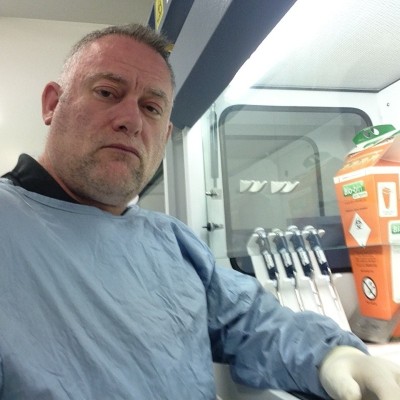
Some 20 years ago my PhD supervisor (now retired), reclined in her office chair while taking a call from a well-known and highly out-spoken American professor of infectious diseases about my application to join his lab in the US. She later recounted part of their conversation.
He had asked, ‘Is Gareth a starter or a finisher?’
My supervisor said, ‘He’s definitely a starter.’
She stared at me over the rim of her spectacles. It felt like she was reminding me of the many late evenings I’d spent setting up repeated assays in the Category 3 Lab. I’ve since endeavoured to manage my perfectionist side so that my project ‘finishes’ get as much attention as my project starts.
For certain, when 90% of your work is done it can feel like the pressure is off, deadlines can become somewhat abstract. We can all find ourselves juggling serial delivery dates. One of the first task to suffer is often the submission of your research reports. Partially completed manuscripts can sit, gathering (virtual) dust, waiting for a moment when you can focus on finalisation. Its submission block. The last steps can feel too challenging to get you over the line. Perhaps the text needs to be formatted to journal style, and/or you need to compile the author addresses and titles, compose the statements on funding and conflicts of interest… the list goes on. And then there’s the cover letter to the Editor. The importance of clear reporting standards and complete disclosure in biomedical manuscripts is well established in the scientific literature [1].
Sometimes the reasons for your block can be complex and nuanced. I recently completed a dual submission to one of the Nature journals. The authors wanted both manuscripts published in the same edition. Dual submissions can be tricky, even more so when the target journal has the exacting standards of Nature. Arranging a discussion with the journal editors prior to submission was essential to see if they agreed with our ambitious goal and how to best approach the submission. Early dialogue with journal editors and careful adherence to journal policies have been recommended to improve transparency and efficiency in the publication process [2].
Not all research projects are suitable for top tier publications. Finding the appropriate target journal is key both to a successful submission and reaching the right audience [3]. Is your manuscript best suited to a general biomedical journal, with a broad audience, or a journal that’s specific to a therapeutic area, with a more specialised audience? The scientific ‘value’ or contribution of your research will also be a key factor. The relevance of your subject matter to a high impact journal is a frequent source of debate in our writing team. It’s always worth asking whether a preference of authors for high impact journals should dominate journal targeting activities. These days the reach and impact of your work is not so much dictated by journal choice as it is by post publication activities to boost your altmetric score [4].
It’s important to bear in mind that meeting peer-reviewers’ requirements is much harder in higher impact journals and failure to meet these requirements and rejection by the journal will substantially delay your publication ambitions [5]. There are some simple strategies that will improve your success. You will find a thorough guide on identifying the best journal to publish your work in our Insider’s Insight 'Targeting your Journal Selection’ [6].
Ideally, you should identify your target journal early in the writing process to ensure your draft document is written according to the journal’s style requirements. Reporting guidelines such as CONSORT and PRISMA emphasise structured preparation aligned with journal standards [1][7]. Having said that, we often find ourselves reformatting clients’ draft manuscripts to give them the best chance of journal acceptance. Considerations for improvement range from a basic language and grammar checks to scientific critique and data presentation that is designed to highlight potential that may be red-flags for peer-reviewers. Transparent and complete reporting has been associated with improved peer-review outcomes and research reproducibility [7].
Writing the manuscript’s abstract is often one of those ‘last steps’ that can turn into a roadblock. Objectively, it should only take about half an hour but getting it right is a lot harder. Structured abstracts have been shown to improve clarity, completeness, and retrieval of biomedical research [8]. We have provided guidance, ideas and tips in Insider’s Insight on how to write Amazing Abstracts [9]. There are other factors to take into account that we also provide guidance on, like our Insider’s Insight on ‘Crafting Catchy Titles that Capture Attention’ [10]. Titles influence discoverability and citation performance in the biomedical literature [11]. We have our guides on how to handle the comments from journal reviewers and, if all else fails, dealing with rejection [12][13]. Constructive engagement with peer review is widely recognised as central to the integrity of scientific publishing [14].
Assuming you have identified your target journal, your text has been approved by all the authors and is ready to go, you will need to compile the submission components. These may include:
Comprehensive disclosure of funding sources and conflicts of interest is recommended by international editorial bodies to protect research integrity [2].
You also need to decide on whether to go with open access or a standard pay-per-view/subscription. Article processing charges for open-access publications can be high, with some journals charging from £1,500 to over £7,000. If your target audience is likely to have subscription access or if your priority is to publish in a prestige journal then you may decide the fees are not worthwhile. It is worth remembering that open-access (freely available) publications increase your article’s visibility, readership, and citation potential [15]. Effectively it will augment the reach of your research and support global knowledge sharing. Open access publication may also be a requirement your research funder [16].
Another point to consider is whether you plan to share any of your data publicly? Data can be shared in public repositories, such as Figshare, Dryad or Zenodo in the form of spreadsheets, text and images etc. Important advantages of sharing your data publicly include transparency, reproducibility, and trust, as well as allowing others to verify and build on your work. In addition, it increases the visibility and citation potential of both the dataset and your article [17]. Public repositories ensure the long-term contribution made by your data while fostering collaboration and secondary analyses. Ultimately, data sharing serves to accelerate scientific progress and strengthen your research impact [18].
Some journals offer free preprint registration, accessing the benefits of sharing your findings ahead of publication in the journal (which can take months). Preprints increase opportunities for greater collaboration, earlier citations and unbiased feedback from peers, providing you with the opportunity to improve your manuscript [19].
In the end I was offered the US lab position. During my 8 years at Case Western I learned how to drive through the finishing line and that impetus depends on your confidence in your works integrity and quality. I was also fortunate to receive comprehensive training on writing manuscripts. Sharing those skills with authors drafting or submitting manuscripts has helped me support dozens of successful manuscript submissions. I learned that when you finally hit the ‘Submit’ button, you want to do so with the confidence that it’s another job well done.
It's never too late to ask for help with your submission, however far along you are.
References
Get our latest news and publications
Sign up to our news letterResources
Social


Contact us
Address
Niche Science & Technology
Unit 26 Falstaff House
Bardolph Road
Richmond TW9 2LH
United Kingdom