I have always considered those of us who write to be ‘creative’. We pour our hearts out onto the paper (metaphorically in the electronic age), where it sits defenceless against ill‑considered judgement and poorly informed opinion. This is often a concern of new medical writers when they join Niche. I always reassure them that all but the most self‑confident writers wonder whether their work is going to be well received. A common issue I have heard from medical writers over the last 20 years (and a question I have regularly asked myself) is: “How do I assess my own work?” Self‑evaluation anxiety is well‑documented among writers and academics [1].
Obviously, when we write for a client they are the ultimate arbiters of quality. However, I find that most medical writers are their own harshest critics, needing the text to be perfect before anyone else reviews it, particularly if that is your in‑house editor (who is only working to ensure that the client sees a perfect document). I am still sensitive to others’ review comments, even after 30 years of writing for the scientific literature. Perfectionism is strongly associated with heightened sensitivity to feedback [2].
We all work alone. We research, draft, edit, proofread and submit, all as a party of one. Therefore, how can we obtain an objective review of our own work? Wracked by self‑doubt, writers often wonder whether we even have the right to comment, to have an opinion. Are we over‑estimating our abilities? We often wonder whether what we are writing is ‘publishable’. This can often result in an interval of creative constipation. Cognitive load and self‑monitoring can impair fluency during drafting [3].
There are ways to evaluate your work as you develop your writing skills and build your confidence. Below are some ideas that may help. Before you start though, I am assuming that you have already printed out your document and read it through slowly and carefully; it is not easy to spot errors or omissions on screen. Hard copies allow you to get a better sense of the entire document and how the different sections relate to each other. Research shows that reading on paper improves error detection and comprehension [4].
Once you have done this, the next obvious steps are:
- Ask someone to read your work. Embrace your fear of judgement. You are a professional writer, so people are going to read your work; you need to become comfortable with sharing your writing. Start with someone you trust if you are particularly nervous. Peer review improves clarity, accuracy and writer confidence [5].
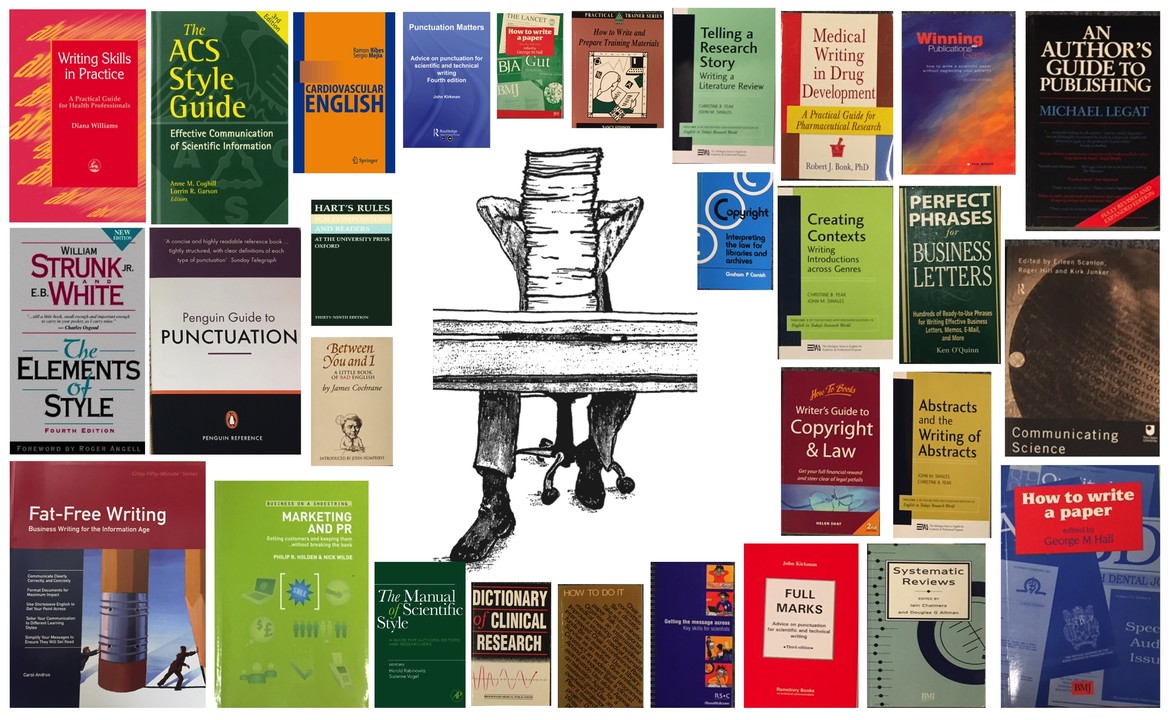
- Study examples of best practice. Reading high‑quality writing gives you a good idea of structure that you can use as a guide. It also gives you a benchmark and a standard to which you can aspire. I always advise our writers to build their own resource library of example texts relevant to their field of study that they can cross‑reference easily. Exposure to expert models is a well‑established method for improving writing skill [6].
- Read your work aloud. It helps you notice mistakes and odd‑sounding phrasing. It may make you feel like you are back at school, but it will often give you a different insight into your content. If the text causes you to trip or hesitate it probably needs to be rewritten. Oral reading increases detection of syntactic and semantic errors [7].
- Use online readability checkers. Tools such as Grammarly, Hemingway or Readable can give you a truly objective opinion. Free sites are available and different tools assess your work with different parameters. However, you might want to consider carefully possible intellectual property issues if you are writing for a commercial client. Readability metrics have long been used to assess clarity and cognitive load [8].
- Read around the subject. I was a track runner when I was younger and my coach would always advise me to run through the line, not focus on the line. Where you are writing about a specific research subject it can be useful to have a good grasp of the associated syntax. Domain knowledge improves writing accuracy and conceptual coherence [9].
- Keep relevant guidelines and style guides handy. As a medical writer, you always need to ensure your work meets local and international guidelines, including advertising and government regulations. Cross‑reference guides when you have doubts. You might also want to think carefully about possible plagiarism. Writers frequently underestimate unintentional plagiarism risk [10].
I always tell writers that their ultimate goal is to become masters of their craft. So, the best way to address this ambition is to take responsibility for your own development. We all need to be open to continued learning so that the next time we are faced with a challenge we are best placed to rise to it. With this in mind you should:
- Review previous work. Look for recurring mistakes or bad habits. Look for both strengths and weaknesses. In fact, the best way to get an objective opinion of your own writing is to walk away from it for at least 24 hours. We don’t always have the luxury of time but even an hour away from your text has a big impact on your ability to spot issues. Temporal distance improves editorial accuracy and reduces cognitive fixation [11].
- Attend writing courses. Courses are usually focused on specific types of writing (scientific manuscripts, journalism etc.). Take refresher courses from time to time. Some courses, like the Niche course on writing clinical study reports, will give attendees personalised feedback and will continue to respond to questions long after the course. Formal instruction significantly improves writing performance [12].
- Write outside your comfort zone. It can be beneficial for medical writers to try creative writing, travel journalism or fiction. Starting a blog can be helpful in making you focus on creating text that you feel could be useful to others. When writing becomes a chore, it’s time to stop and refocus. Cross‑genre writing enhances creativity and linguistic flexibility [13].
- Learn from your mistakes. Keep details of any errors, mistakes or content your reviewers, clients or editors have had issues with or amended. I still have a list tacked to a whiteboard on the wall behind my screen. If you aren’t getting feedback on your work, don’t be afraid to ask for it. Error‑tracking is a recognised method for improving long‑term writing accuracy [14].
- Start your own style guide. Some people might call this a swipe file – a collection of work you find inspiring and useful. There is no set format for a style guide – it could be a Microsoft Word document of lists of sample texts or it might be a physical file containing ads, articles, blogs or poetry. What’s important is that the content is representative of high quality and transferable text. You might also include a record of why you have selected each example. Writers who maintain personal corpora develop stronger stylistic consistency [15].
- Keep reading. Regular reading is one of the best ways to become a better writer. Reading opens your mind to new voices and styles of writing, but that isn’t the only reason: our fields are constantly changing. We can’t expect to remain up‑to‑date on everything. Reading will help you to become a better writer without even realising you’re learning. Reading volume is one of the strongest predictors of writing quality [16].
Unfortunately, not many of us are natural writers. There are a lucky few, but for the rest of us, becoming a good writer takes time and effort. Improved writing will not happen overnight, but it will happen. Your skills will develop with concerted effort, practice and patience. If nothing else, enjoy being creative. In what will seem no time at all you will be able to look back on a portfolio of documents of different shapes and sizes, all written by you. Skill acquisition research consistently shows that deliberate practice leads to mastery [17].
References (Vancouver style)
- Kellogg RT. Training writing skills: A cognitive developmental perspective. J Writ Res. 2008.
- Flett GL, Hewitt PL. Perfectionism and maladjustment. Am Psychol. 2002.
- Kellogg RT. Cognitive psychology of writing. Oxford University Press; 1994.
- Mangen A, Walgermo BR, Brønnick K. Reading linear texts on paper versus screen. Int J Educ Res. 2013.
- Cho K, MacArthur C. Learning by reviewing. J Educ Psychol. 2010.
- Graham S, Perin D. Writing next: Effective strategies. Alliance for Excellent Education; 2007.
- Hayes JR. A new framework for understanding cognition and affect in writing. 1996.
- Klare GR. Readability. Annu Rev Psychol. 1974.
- Flower L, Hayes JR. A cognitive process theory of writing. Coll Compos Commun. 1981.
- Pecorari D. Academic writing and plagiarism. Continuum; 2008.
- Scardamalia M, Bereiter C. The psychology of written composition. 1987.
- Graham S, Harris KR. Evidence‑based writing instruction. 2016.
- Ward TB. Creative cognition. 1995.
- Shaughnessy M. Errors and expectations. Oxford University Press; 1977.
- Douglas Biber, Variation across speech and writing . Cambridge: Cambridge
- University Press, 1988. Pp. xiii + 299.
- Stanovich KE, Cunningham AE. Reading exposure and writing quality. 1993.
- Ericsson KA. Deliberate practice and acquisition of expert performance. Psychol Rev. 1993.