Turning Expert Insights Into Actionable Strategies

Advisory board meetings are often used to address perceived knowledge gaps and build consensus. They serve to capture and distil the combined wisdom of a group of subject area experts. When managed appropriately advisory boards generate powerful outcomes.

Learn how to:
Clearly define the core topic
Establish aims, objectives and outcomes
Build balanced advisory teams
Plan all aspects and describe clear project milestones
Record outcomes
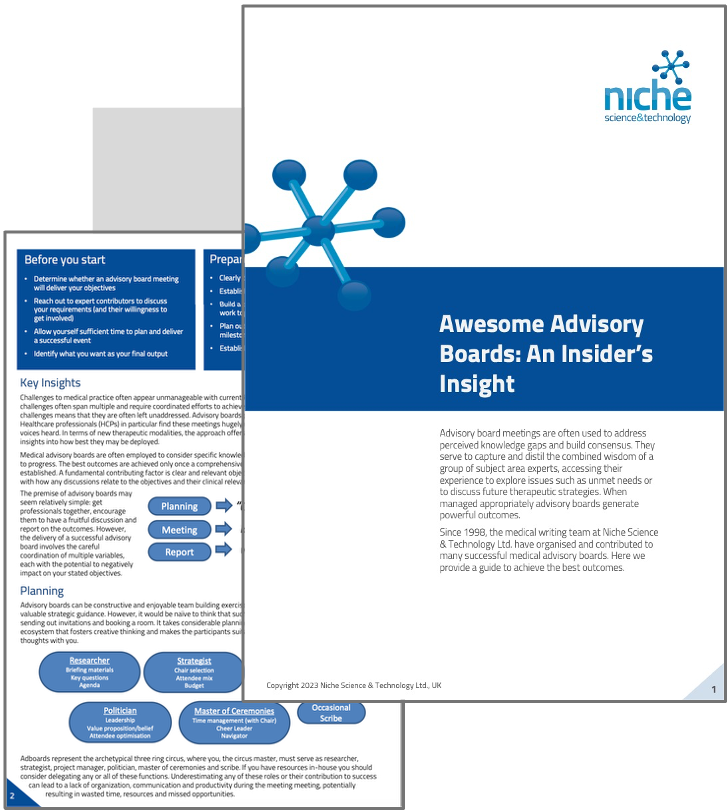
Infographic showing advisory board process with blue flowchart elements, participant roles, and planning steps for medical research meetings.
Join the other 20,000+ pharma colleagues who have downloaded our Insider’s Insights.

Get your Insider's Insight

* indicates required

Frequently Asked Questions about the Insider’s Insight: Awesome Advisory Boards

To help you get the most out of our resource library, we have compiled answers to the most common questions regarding the development, application, and distribution of our specialist guides.

At Niche Science & Technology, we believe that sharing expertise is the first step toward industry-wide excellence.
Medical advisory boards help address knowledge gaps by gathering experts to share insights, evaluate unmet needs, and develop strategic guidance for future clinical or therapeutic decisions. They distil collective expertise into actionable outcomes.
Before deciding, you should assess whether an advisory board will effectively meet your objectives, whether expert input is necessary, and whether there is sufficient time and resources to plan a successful event.
In‑person meetings foster natural discussion and rapport, while virtual meetings are more cost‑effective and easier to schedule. The COVID‑19 pandemic has increased comfort with virtual formats, but face‑to‑face meetings may better capture tone and reduce miscommunication.
An effective advisory board typically includes 8–10 participants: a strong Chair, key opinion leaders (KOLs), clinicians, specialists (e.g., statisticians, economists), and a medical writer. Diversity across region, discipline, gender, and experience enhances the quality of discussion.
Organisers must ensure adherence to international and national pharmaceutical codes of practice, such as IFPMA, ABPI (UK), PhRMA (US), Rx&D (Canada), and Medicines Australia. Local cultural norms, laws, and expectations around conduct and hospitality must also be respected.

Get our latest news and publications

Sign up to our news letter

© 2025 Niche.org.uk     All rights reserved

HomePrivacy policy Corporate Social Responsibility
chevron-down