Top 10 Tips To Writing Up Your PhD

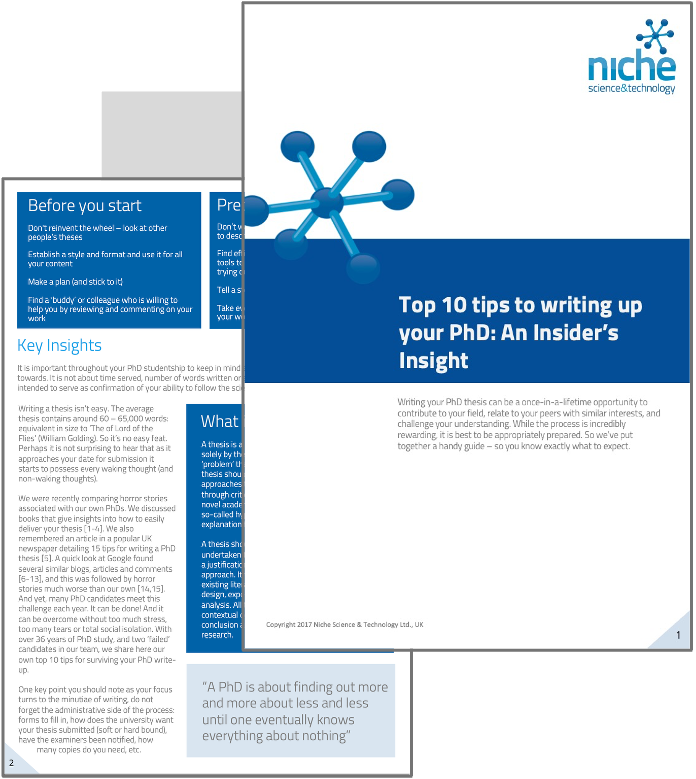
Writing your PhD thesis can be a once-in-a-lifetime opportunity to contribute to your field, relate to your peers with similar interests, and challenge your understanding. Your thesis is intended to serve as confirmation of your ability to follow the scientific method.

Learn to:

Not wait, start writing
Keep thorough records
Tell a story and write for impact
Take every opportunity to present and publish
Not reinvent the wheel
Join the other 20,000+ pharma colleagues who have downloaded our Insider’s Insights.

Get your Insider's Insight

* indicates required

Frequently Asked Questions about the Insider’s Insight: 
Writing Up Your PhD

To help you get the most out of our resource library, we have compiled answers to the most common questions regarding the development, application, and distribution of our specialist guides.

At Niche Science & Technology, we believe that sharing expertise is the first step toward industry-wide excellence.
A PhD thesis demonstrates your ability to follow the scientific method and make an original scholarly contribution. It must define a problem, review existing literature, identify a gap, propose a hypothesis, justify the methods used, present data, critically evaluate results, and conclude with implications and future directions
Start by reviewing other theses from your institution or field to understand typical structure, depth, and formatting expectations. Establish a consistent style and format early, create a thesis plan with clear milestones, and begin writing—even imperfectly—to build momentum.
Many candidates begin with the Methods section because it is the most straightforward and helps establish a writing routine, though starting with Results can provide clarity on narrative direction. The Introduction is best written last, once the full story of your research is clear. Writing is iterative—expect to cycle through multiple drafts and revisions
Properly cite all work, data, and ideas that are not your own. You may reuse your own previously published material, but it must be clearly labelled and referenced. Avoid copying text written by others (including supervisors) without attribution. Detection tools like Turnitin or iThenticate are widely used, so proper citation is essential
Find your best working time and environment, adopt consistent writing habits, and seek support from peers, mentors, or supervisors. Break writing into manageable sections, take short restorative breaks, and keep detailed records. Presenting and publishing your work can also enhance motivation and strengthen your thesis

Get our latest news and publications

Sign up to our news letter

© 2025 Niche.org.uk     All rights reserved

HomePrivacy policy Corporate Social Responsibility
chevron-down