How to Edit Your Own Scientific and Medical Writing

Many think professional writing skills are only for authors. Wrong. Writing well is an essential life skill. Do you trust your first draft, or do you have a system to ensure your message reflects your true capabilities?

Learn how to:
Overcome word blindness.
Improve structure and flow.
Edit your own work effectively.
Write clearly and concisely.
Ensure consistency and quality.
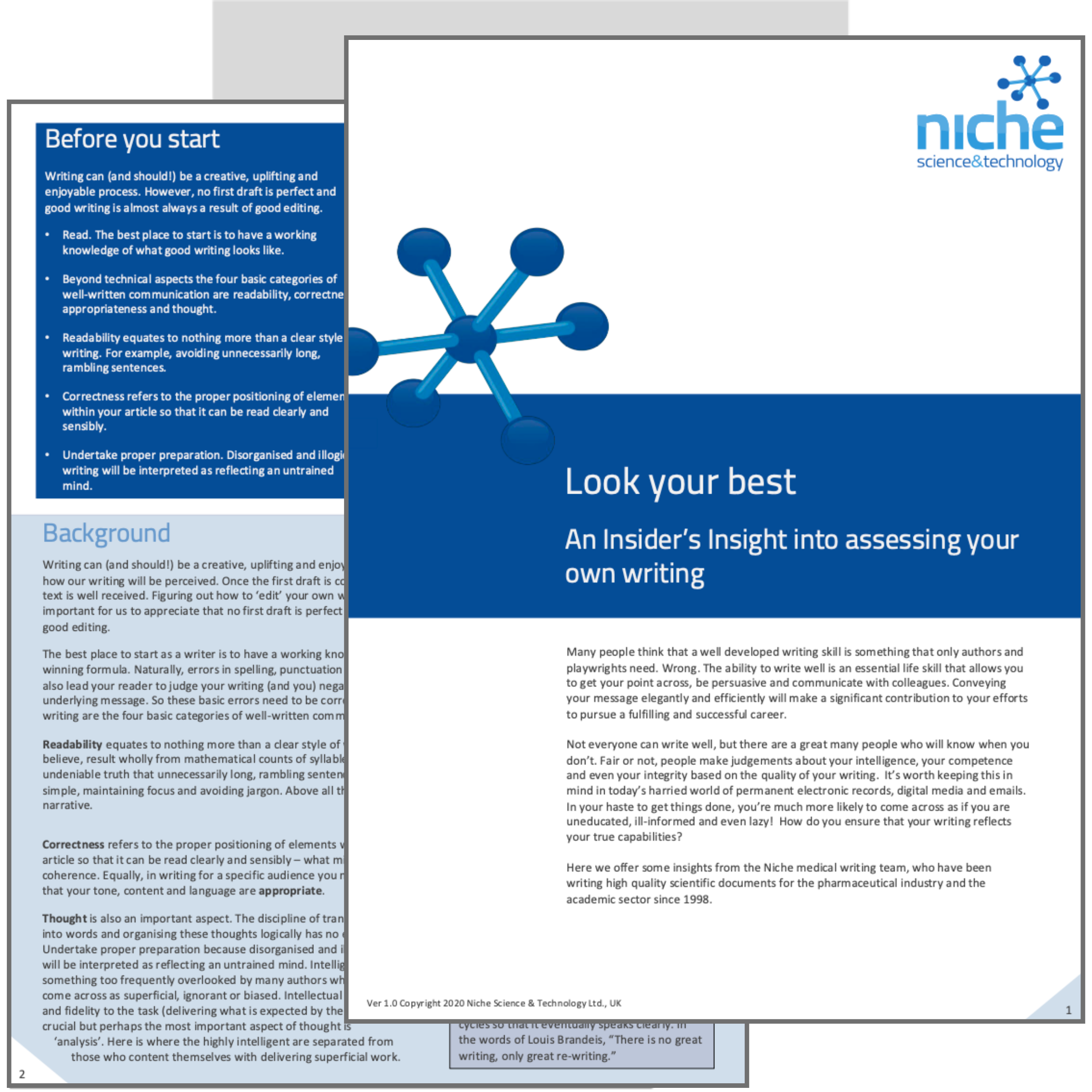
Professional cover page of a Niche Science and Technology guide titled “Look Your Best: An Insider’s Insight into Assessing Your Own Writing,” featuring a blue and white layout with molecular graphic branding and introductory text on medical writing and self editing | Niche
Join the other 20,000+ pharma colleagues who have downloaded our Insider’s Insights.

Get Your Insider's Insight

* indicates required

Frequently Asked Questions about the Insider’s Insight: 
Look Your Best

To help you get the most out of our resource library, we have compiled answers to the most common questions regarding the development, application, and distribution of our specialist guides.

At Niche Science & Technology, we believe that sharing expertise is the first step toward industry-wide excellence.
Good writing is an essential life skill that influences how others perceive your intelligence, competence, and professionalism. Poor writing—even in emails—can make you appear uneducated or careless, while strong writing communicates clarity, confidence, and credibility.
Effective writing is built on four foundational elements: readability, correctness, appropriateness and thought. These ensure clear style, coherent structure, suitable tone for the audience, and logical, thoughtful organisation of ideas.
Word‑blindness occurs when you’re too familiar with your text to see mistakes. Solutions include letting your draft rest for at least a day or two, printing it out, and reading it aloud to shift perspective and spot errors you’d normally miss.
Frequent pitfalls include jargon, clichés, passive voice, rambling, overwriting, inconsistent formatting, poor structure, and assuming the reader knows what you know (the “curse of knowledge”). Addressing these strengthens clarity and improves reader engagement.
We recommend continuous reading in your field, studying high‑quality examples, using readability tools, keeping a personal style‑mistakes log, practising different writing genres, attending writing courses, and seeking constructive feedback from peers.

Get our latest news and publications

Sign up to our news letter

© 2025 Niche.org.uk     All rights reserved

HomePrivacy policy Corporate Social Responsibility
chevron-down