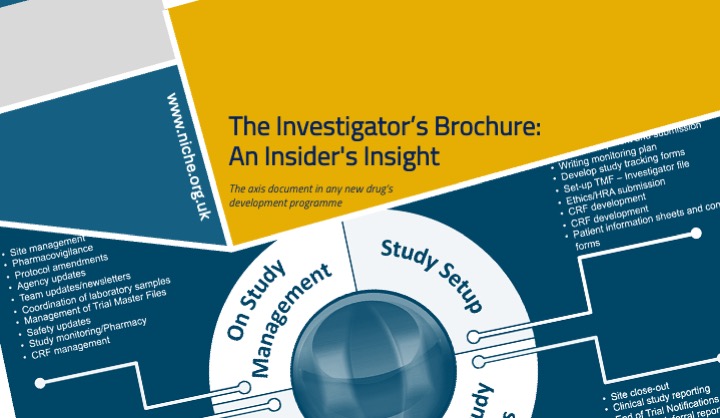
The Investigator’s Brochure (IB) has long been a cornerstone of clinical development, serving as the definitive compendium of all non-clinical and clinical data for an investigational medicinal product (IMP). By 2018, its role was well-established, underpinned by the ICH E6 Good Clinical Practice guideline, which meticulously defined its content and purpose. The IB was recognised not merely as a technical summary but as a multifunctional document critical for regulatory submissions, ethics committee review, and, most importantly, for enabling investigators to conduct a balanced risk-benefit assessment. However, as the attached document from Niche Science & Technology illustrates, the practical application of the IB was fraught with challenges, from its misuse as a marketing tool to the complexities of managing overlapping information with the Investigational Medicinal Product Dossier (IMPD) and the need to evolve the document as clinical programmes matured [1]. The last few years have marked a significant shift, moving the discourse from what an IB should contain to how its data could be optimally interpreted and presented to enhance safety and decision-making, driven by a wave of new guidance and critical re-evaluation following high-profile clinical trial incidents.
A seminal publication that encapsulates this evolution is the 2021 article by Rengelshausen and colleagues, "How to Interpret an Investigator’s Brochure for Meaningful Risk Assessment: Results of an AGAH Discussion Forum" [2]. This work, emerging from a 2019 forum of expert stakeholders, including regulators, industry scientists, and academics, directly addressed the pressing need to transform the IB from a static data repository into a dynamic tool for proactive risk management. The impetus for this discussion was clear: tragic events in first-in-human trials, such as the TGN1412 cytokine storm and the BIA 10-2474 neurologic fatalities, had underscored the catastrophic consequences of inadequate risk assessment. The European Medicines Agency’s subsequent 2018 guideline on risk mitigation for early trials had already set the stage, demanding sponsors explicitly address uncertainties in their predictions, with the IB serving as the pivotal document where this evidence resides [3].
Crucially, the same period also saw the first systematic, empirical evaluation of IB quality. In a 2021 cross-sectional study, the study analysed 97 IBs and found that only 2% adhered to fundamental principles of evidence synthesis, such as reporting a comprehensive search strategy or providing a critical appraisal of prior clinical studies [4]. This finding provided quantitative validation of the concerns raised by practitioners: despite the IB’s central role in risk assessment, its preparation often lacked the methodological rigour expected of a scientific evidence synthesis, potentially compromising the reliability of the risk-benefit evaluations conducted by investigators and ethics committees.
The article’s primary contribution lies in its granular, multi-stakeholder critique of IB content and structure, moving beyond broad regulatory statements to practical, actionable recommendations. A key finding was the identification of the "Summary of Data and Guidance for the Investigator" (Section 7) as the area with the highest need for improvement. Participants rated it poorly for readability, comprehensibility, and appropriateness for risk assessment [2]. This was a direct challenge to the common pitfall noted in the 2018 baseline, where authors struggled to keep the IB concise and non-promotional [1]. The forum’s consensus was that Section 7 must be a clear, logical synthesis that guides investigators on dosing, expected adverse reactions, and emergency measures, rather than a mere repetition of data presented elsewhere.
A significant advancement highlighted by the work of Rengelshausen et al. was the introduction of a practical tool for translational data integration, originally described by van Gerven and Cohen in 2018 [5]. This tool, which allows non-clinical data to be sorted by exposure (Cmax) and colour-coded by toxicity severity, offers a solution to the longstanding challenge of bridging animal studies to human risk. It moves beyond the traditional, text-heavy summaries to a visual, integrated format that allows investigators to quickly grasp the safety margins and potential hazards as the human dose escalates. This directly addresses the difficulty, noted in the baseline, of presenting complex non-clinical data in a way that is useful for clinical decision-making [1].
The forum brought much-needed clarity to the contentious issue of Reference Safety Information (RSI), a requirement solidified by the EU Clinical Trial Regulation (EU) No. 536/2014. The forum debated the format and location of the RSI, which defines the list of "expected" serious adverse reactions for regulatory reporting. While guidance from the Clinical Trial Facilitation Group (CTFG) existed, its implementation was inconsistent (5). The overwhelming preference from participants (61%) was for the RSI to reside as a distinct section (Section 8) rather than being buried within Section 7 [2]. This structural recommendation was a direct response to a practical problem: ensuring that the list of expected events, used to determine whether a serious adverse reaction requires expedited reporting, is unmistakably clear and separate from the broader safety discussion.
The discussions also tackled the quality of non-clinical data presentation, a persistent theme. Echoing previously raised concerns, which noted that IB’s often lack critical details on preclinical efficacy studies, Rengelshausen et al. emphasised that all pharmacology studies, including those with negative outcomes, must be reported to avoid assessment bias [2][7]. This was a crucial advancement, moving the industry away from a culture of selectively reporting only positive findings, which can create a dangerously incomplete picture of the IMP’s characteristics for investigators and ethics committees. The empirical looking at IB quality reinforced this point, demonstrating that selective reporting was not merely a theoretical risk but a documented deficiency in actual IBs [4]. The article also reinforced the ICH E6 requirement for tabular data presentation, advocating for a format that facilitates clear identification of safety margins, dose-response relationships, and species differences
In conclusion, we have seen a maturation in the discipline of IB development. While our observations in 2018 accurately captured the operational challenges faced by sponsors, such as managing document scope, cross-referencing with the IMPD, and evolving the IB through multiple indications, the subsequent years provided both an empirical benchmark of deficiencies and a clear roadmap for improvement [1][2][4]. The focus shifted from merely complying with a regulatory template to actively constructing a document that facilitates meaningful risk assessment. The key advancements were the endorsement of new visualisation tools for translational data, a firm consensus on the optimal structure for Reference Safety Information, and a renewed emphasis—supported by both expert consensus and empirical evidence—on the completeness, synthesis quality, and interpretability of all non-clinical and clinical data. This era cemented the IB’s role not just as a historical record, but as a living, interpretable instrument essential for safeguarding patient and participant safety in the complex journey of drug development.
Reference

Get our latest news and publications
Sign up to our news letterResources
Social


Contact us
Address
Niche Science & Technology
Unit 26 Falstaff House
Bardolph Road
Richmond TW9 2LH
United Kingdom